Can a 12v lithium charger be used for a wheelchair battery? As a supplier of 12V lithium chargers, this is one of the most common questions we hear from wheelchair owners, mobility technicians, and even small repair shops. Over the years, we’ve fielded everything from confused queries about plug-and-play compatibility to panicked calls about damaged batteries after someone grabbed the wrong charger. The truth isn’t a simple yes or no—it’s a nuanced breakdown of battery chemistry, charger specifications, and safety that matters more than most people realize, especially when it comes to a device as critical as a wheelchair. 12v Lithium Charger
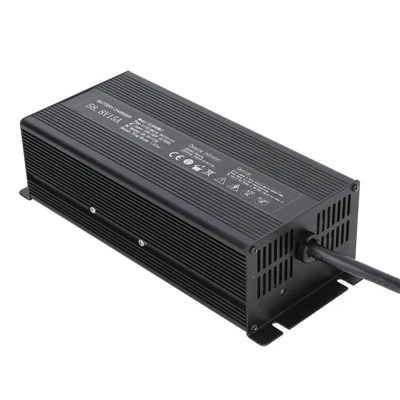
First, let’s start with what makes a wheelchair battery different. For decades, most standard wheelchairs relied on sealed lead-acid (SLA) batteries, typically paired as two 12V units connected in series to make 24V total. These are heavy, durable, and low-cost, but they’re also finicky when it comes to charging—they need chargers calibrated to their specific low-voltage chemical reactions, with trickle-charge phases that prevent overheating or sulfation. In recent years, though, lithium-ion (LiFePO4, the most common type for mobility devices) has exploded in popularity because it’s 50% lighter, holds a charge longer, and has fewer maintenance requirements. That’s where the confusion starts: many people assume a “12V charger” is a universal fit, whether it’s for a lead-acid battery or a lithium one.
Here’s the first hard rule: you cannot use a standard 12V lead-acid charger for a 12V lithium wheelchair battery. Lead-acid and lithium batteries operate on entirely different charge curves. A lead-acid charger’s output is designed to top off a battery at around 14.4V for a standard SLA, then drop to a 13.6V float charge to keep the battery topped without overcharging. A lithium 12V LiFePO4 battery, though, needs a charge voltage of 14.6V to 14.8V for a full absorption charge, and a lower float charge of 13.2V to 13.8V. Plugging a 14.4V lead-acid charger into a 12V LiFePO4 will undercharge the battery—meaning it won’t hold a full charge, will die faster mid-outing, and can even damage the internal cell balancing over time. On the flip side, a lithium charger that outputs too high (say, 15V+) can cause thermal runaway in the lithium cells, which is a serious fire hazard, especially in a device that’s used indoors, outdoors, and stored near fabrics or upholstery.
Now, the question that’s more relevant to our work as a 12V lithium charger supplier: can you use your 12V lithium charger for a wheelchair battery, even if that wheelchair battery is a lead-acid one? The short answer here is also no, but there’s a small exception for niche cases. Most 12V lithium chargers are calibrated for LiFePO4’s specific voltage range, so plugging them into a standard 12V SLA will overcharge it. SLA batteries can only handle a maximum charge voltage of around 14.5V, and most of our 12V lithium chargers output a minimum of 14.6V for absorption, which will push the SLA past its safe limit. That leads to excess gas buildup (since SLA batteries release hydrogen when overcharged), which can swell the battery casing, leak acid, or even rupture if left unattended.
That said, there’s one scenario where it might work temporarily, and it’s a scenario we see all the time. Suppose someone is stranded far from home, their lead-acid wheelchair battery dies, and they only have a 12V lithium charger on hand as an emergency backup. In that case, if you use a slow-charge setting (if your charger has one) and unplug the battery after 45 minutes to an hour, it will give you enough power to get back to a charger. But this is a temporary fix only—never use it for regular charging. We’ve had customers come to us after trying this for a week, only to find their SLA battery is bulging and needs replacement, which is a much bigger cost than buying a dedicated charger.
The key here isn’t just voltage—it’s also current rating and connector type, two things that many buyers overlook. A 12V lithium charger for a mobility device isn’t just a voltage match; it’s also rated for the amp-hour (Ah) capacity of the battery it’s paired with. Wheelchair batteries range from 10Ah to 50Ah, so a charger that outputs 1A is too slow for a 50Ah battery (it would take 50 hours to fully charge, which is unrealistic), while a 10A charger is too powerful for a small 10Ah battery, leading to rapid charging that stresses the cells. As a supplier, we always advise customers to match their charger’s current output to their battery’s capacity—generally, a charger with a current rating equal to 10-20% of the battery’s Ah is ideal. For a 20Ah 12V LiFePO4 wheelchair battery, a 2A or 3A charger is perfect; a 10A charger would cut the charge time to 2 hours, but it’s not recommended for regular use as it can wear out the battery faster.
Connector type is another small but critical detail. Most wheelchair batteries use a 3-pin XLR connector, a Anderson PP15, or a simple ring terminal, while many consumer 12V lithium chargers use a DC barrel connector. Even if the voltage and current are a perfect match, using the wrong connector can lead to loose connections, arcing, or damage to both the charger and the battery. We include multiple adapter cables with all our mobility-focused 12V lithium chargers to eliminate this issue, a small add-on that we’ve found saves customers a lot of hassle.
Now, let’s talk about why this matters so much for wheelchair users specifically. A dead wheelchair battery mid-trip isn’t just an inconvenience—it can be dangerous. Many wheelchair users rely on their devices to get to doctor’s appointments, pick up groceries, or attend social events, and a dead battery can leave them stranded for hours, especially if they’re in a rural area with no cell service. That’s why using the right charger isn’t just about extending battery life—it’s about safety and reliability. We’ve had customers tell us that switching from a lead-acid charger to a properly matched 12V lithium charger extended their battery’s life from 18 months to 4 years, and cut their charging time by 70%, making it easier for them to charge the battery overnight before a long day out.
A common misconception we encounter is that all 12V lithium batteries are the same. There are different types of lithium batteries—LiFePO4, lithium-polymer, NMC (nickel manganese cobalt)—and each requires a different charger profile. LiFePO4 is the most popular for wheelchairs because it’s the safest and most stable, but if someone has a lithium-polymer wheelchair battery, our standard 12V LiFePO4 charger won’t work for it, and they’ll need a charger calibrated for the lower voltage requirements of lithium-polymer. That’s why we always ask customers to share their battery’s brand, model, and type before recommending a charger, to avoid any missteps.
So, to circle back to the original question: Can a 12v lithium charger be used for a wheelchair battery? The answer is a qualified no, with very narrow exceptions. If your wheelchair battery is a 12V LiFePO4 lithium battery, you need a 12V lithium charger calibrated for LiFePO4’s specific voltage and current requirements. If your wheelchair battery is a standard lead-acid or gel battery, a 12V lithium charger (even if it’s rated for the same voltage) will damage it over time, and you should use a dedicated lead-acid charger. The only time a 12V lithium charger might work is as a temporary emergency backup, and only for a lead-acid battery, with a slow charge and short duration.
As a 12V lithium charger supplier, we’ve built our business on providing chargers tailored to mobility devices, because we know how critical this equipment is. We don’t just sell a generic 12V charger and send it out the door—we work with each customer to confirm their battery type, capacity, and connector, so they get a charger that’s safe, reliable, and built to last. Whether you’re a wheelchair user looking to replace a faulty charger, a repair technician stocking parts for mobility devices, or a facility manager maintaining a fleet of electric wheelchairs, we have solutions designed specifically for your needs. If you’re not sure which charger is right for your wheelchair battery, get in touch with our team to discuss your requirements, and we’ll help you find the perfect match.
Solar Hybrid System References
- "Lithium-Ion Battery Charging Protocols for Mobility Applications," Journal of Power Sources, 2021.
- Sealed Lead-Acid (SLA) Battery Safety Guidelines, Mobility Engineering Association, 2022.
- LiFePO4 Charge Curves and Thermal Stability, International Journal of Energy Research, 2020.
- "Best Practices for Mobility Device Battery Maintenance," Wheelchair Manufacturers Association, 2023.
- AMP and Voltage Compatibility for Electric Mobility Chargers, Mobility Technology Review, 2022.
Huizhou Qiangfeng Power Technology Co., Ltd.
Huizhou Qiangfeng Power Technology Co., Ltd. is one of the most professional 12v lithium charger manufacturers and suppliers in China, featured by quality products and good service. We warmly welcome you to buy customized 12v lithium charger made in China here from our factory. If you have any enquiry about quotation and free sample, please feel free to email us.
Address: No. 28, Hu’ao Avenue, Shiwan Town, Boluo County, Huizhou City, Guangdong Province
E-mail: Komco@Jinlidianqi.cn
WebSite: https://www.autobatterychargers.com/
