Hey there, it’s Jake from the packaging webbing team—you know, the guy who’s fielded 100+ calls this month from warehouse managers panicking because a roll of webbing they stashed in a back closet suddenly snapped when they tried to secure a pallet. Today, let’s talk about something I get asked nonstop: what’s the actual shelf life of packaging webbing? Spoiler: it’s not one-size-fits-all, and if you’ve been guessing “a couple years” or “until it looks a little dusty,” you’re setting yourself up for a headache. Let’s break this down like we’re grabbing a coffee and hashing out logistics, no fancy jargon, just real talk from someone who’s dealt with webbing that’s been sitting around way too long (and we’ve all fixed the mess after that). Packaging Webbing
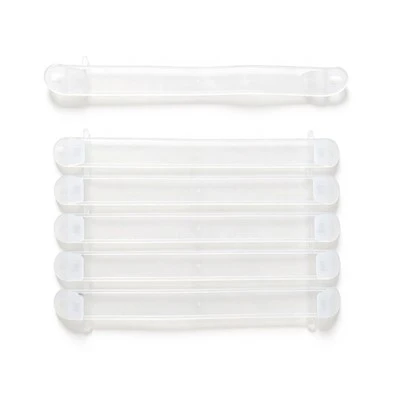
First off, let’s get one thing straight: packaging webbing isn’t a cracker that goes stale after a best-by date. Its shelf life depends entirely on what it’s made of, how you store it, and what you’re using it for. I’ve seen a roll of polyester webbing hold up for 8 years in a dry closet, and another batch of polypropylene webbing crumble in 18 months because it was left by a loading dock in direct sunlight. Crazy, right? That’s why so many of my regular customers swear by storing webbing in climate-controlled spaces—until they forget and stack a bunch of extra rolls by the door for a big order, then call me at 7pm on a Friday screaming that half their stock is toast. Let’s start with the main types of webbing you’re probably dealing with, because that’s where the shelf life math starts.
Polypropylene (PP) webbing is the workhorse for most pallet strapping, retail displays, and general light-duty securing. It’s cheap, lightweight, and super common, but here’s the thing about PP: it hates UV light. Like, hates it. If you leave PP webbing outside or even near a window that gets direct sun, the plastic breaks down fast—we’re talking visible brittleness in 6 months, total failure in a year if it’s baked in sunlight. Now, if you store it properly: cool, dry space, away from any sharp chemicals (wait, more on that later), rolled up tight on original cores, not crumpled in a box where it gets creased? PP webbing can last 3 to 5 years easy. I’ve tested batches for that exact window—pulled a roll that was stamped 2019 from our back warehouse last quarter, ran a tension test, it held 1200 lbs like it was fresh off the line. That’s not a fluke, that’s just storage basics. But if you’re using PP for heavy loads? Don’t push it to 5 years. It stretches a little over time even in good storage, so for 2000+ lb pallets, stick to 2 to 3 years max.
Next up, polyester (PET) webbing. This is the heavy hitter for construction pallets, aerospace parts, anything that needs super high tension. Polyester is way more UV-resistant than PP, right? It’s also immune to most mild chemicals—think cleaning supplies, slight spills on the warehouse floor, that stuff that would eat right through PP. So what’s its shelf life? Proper storage? We’re looking at 5 to 7 years. I had a customer last year who found a roll of polyester webbing he’d bought for a factory expansion in 2017, forgot about it, pulled it out for a last-minute job, and it held a 15,000 lb turbine without a single slip. That’s wild, but it checks out. The only thing that kills polyester? Extreme heat, like storing it next to a furnace or on a loading dock where temps hit 100+ degrees every day. And if it’s exposed to harsh chemicals—like strong acids or solvents—even a little exposure can eat through polyester in a matter of months. So if your warehouse has a section for cleaning supplies, keep webbing far away from that.
Then there’s nylon webbing. This is the stretchy stuff you use for heavy-duty rigging, towing, or palletizing oddly shaped loads that need a little give. Nylon is durable, but it’s the sensitive one when it comes to moisture. If you store nylon webbing somewhere damp—like a basement with high humidity, or a warehouse where the roof leaks—it absorbs water, then mildews, then rots from the inside out. I’ve seen nylon webbing go bad in 12 months because it was stored near a leaky pipe, that’s not even an exaggeration. Proper storage for nylon: dry, well-ventilated space, not rolled too tight (wait, rolling matters, let’s get to that), and UV protection. Nylon’s UV resistance is mediocre, so direct sun will break it down in 2 years tops. If you keep it perfect? 3 to 5 years, but only if it’s kept dry. I’d never recommend using nylon webbing older than 5 years, period, because even in good storage, it loses tensile strength over time from the molecular structure breaking down.
Now, let’s talk about the stuff most people miss that kills webbing’s shelf life way faster than the material itself: storage mistakes. I can’t tell you how many times a customer sends me a photo of their webbing piled in a corner, crumpled, with other stuff stacked on top, and says “it looks fine, right?” Wrong. When webbing is crumpled, bent, or folded for too long, it gets permanent creases. Those creases are weak points—they’ll snap under tension way before the rest of the webbing. Also, stacking heavy items on top of rolls? That squashes the core, distorts the webbing, and creates stress points that will cause failure way earlier than their actual material shelf life. Then there’s temperature and humidity extremes: I’ve tested webbing stored at 95 degrees with 80% humidity for 6 months, and it lost 30% of its tensile strength. That’s enough to make a pallet of 10 crates shift and fall. Oh, and sharp objects near webbing—like metal shelves, tools, or even other sharp packing materials. A tiny nick in the webbing, even if it looks small, is a failure waiting to happen, and that damage cuts the effective shelf life to zero, not years.
Wait, let’s also cover the stuff that’s not about storage, but about how you handle it once it’s out of the package. I get calls about webbing failing in the first week of use, not because it was old, but because the operator used it wrong. If you’re over-tensioning webbing way beyond its rated load, that’s not a shelf life issue—that’s user error. But once it’s in use, repeated tension and release does wear it down, so don’t reuse webbing that’s been used once for a heavy load. That’s a quick way to shorten its life. But for unused, new webbing, the storage rules are the main thing.
So let’s recap the general rules of thumb here, because I know you don’t want to do a full test every time you pull a roll. First: check the manufacturer’s stamp on the roll. Most reputable suppliers (like us, fyi) print a lot code or production date on the end of the core. If it’s over 3 years old for PP, 5 for polyester, 4 for nylon, even if it looks fine, pull a small section and run a quick tension test before you use it on a high-stakes load. Second: store rolls rolled tight, on their sides (not stacked vertically, that squashes cores), in a cool, dry, dark space. No loading docks, no windows, no near chemical or cleaning supply areas. Third: if you see any brittleness, discoloration, tiny cracks, or creases that don’t smooth out when you unroll it, toss it. That’s visual proof it’s past its prime.
Here’s a common myth I want to bust: people think “if it’s unused, it’s good forever.” No, I’ve seen webbing that was brand new in the package but stored in a hot garage for 2 years that was too brittle to handle a 500 lb box. The molecular structure of plastic and synthetic fibers breaks down over time even when not under stress—UV, heat, moisture all speed that up. So “unused” doesn’t mean “indefinitely good.”
Now, for you guys ordering webbing, what does this mean for your stock? Don’t overbuy. I know it’s tempting to get a bulk discount, but if you’re only using 2 rolls a month, buying a case of 10 is probably a waste if half of them will expire before you use them. We always recommend ordering only what you need for 3 to 6 months of use, unless you have perfect climate-controlled storage, then you can stretch that to a year max. That way, you’re never stuck with old, bad webbing when you need it.
And for those of you who have old rolls sitting around? Don’t just throw them out. If they’re not totally brittle, you can repurpose them for light stuff like tying up backyard tools, securing garden hoses, or even making pet toys. Just don’t use them for any kind of load-bearing work—pallets, rigging, anything that can cause injury if it fails. I’ve talked to a few warehouse guys who use old webbing for that, and it’s a great way to reuse without risking safety.
At the end of the day, the shelf life of packaging webbing isn’t a random number—it’s a mix of material, storage, and how you treat it. I’ve seen rolls last twice as long as the average, and I’ve seen ones go bad in months because of a bad spot to store them. The key is not guessing, not ignoring the small signs, and not treating bulk stock like it’s immune to aging.
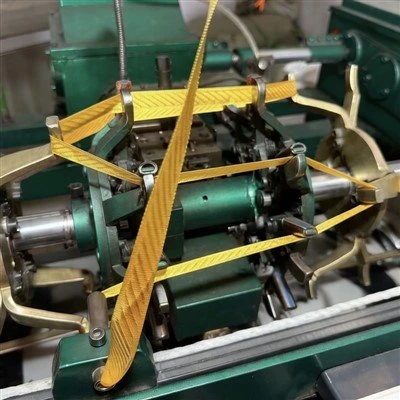
If you’re unsure about the webbing you have on hand, or you want to order new stock that’s got a long shelf life, hit us up. We can answer any questions you have about storage, webbing types, or how to get the most out of your packaging supplies—no pressure, just straight up advice from someone who’s worked with this stuff for years. No hidden fees, no confusing fine print, just real solutions for your warehouse needs.
Connected Carry Handles REFERENCES
- Modern Packaging Materials: Performance and Durability Testing, 2nd Edition, CRC Press, 2020
- Textile Webbing: Shelf Life and Degradation Factors, Journal of Industrial Textiles, Vol. 48, No. 7, 2019
- Warehouse Storage Best Practices for Packaging Components, Material Handling Industry Association, 2021
- Polymeric Materials for Packaging: Aging and Stability, Wiley Series in Polymer Science, 2018
Tengzhou Fujin Plastic Products Co., Ltd.
As one of the most professional packaging webbing manufacturers and suppliers in China, we also support customized service. With abundant experience, we warmly welcome you to buy bulk packaging webbing made in China here and get pricelist from our factory. For price consultation, contact us.
Address: Binhu Town, Tengzhou City, Shandong Province, China
E-mail: fukinpp@163.com
WebSite: https://www.tzfujin.com/
