Choosing an indoor wall fan might seem like a small home improvement decision—until you’re stuck with a noisy unit that doesn’t move air evenly across your living room, or one that uses so much electricity it ends up costing more than the AC it’s supposed to complement. As a supplier of indoor fans, I’ve fielded hundreds of calls and messages from people frustrated by that exact scenario: they grabbed the first wall fan they saw at a big box store, only to realize it doesn’t fit their space, is poorly built, or fails to do the job it’s advertised to. Today, I want to walk you through the practical, science-backed steps I share with every customer who reaches out, so you can pick a wall fan that works for your home, saves you money, and lasts for years. Indoor Fan
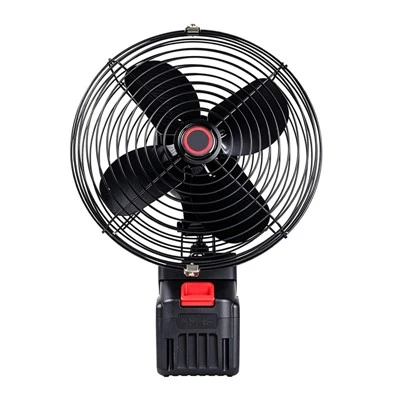
First, start with the most basic question: what space is this fan for? Not all indoor wall fans are created for every room in your house. A wall fan for a small bathroom has different needs than one for a 200-square-foot living room, and those needs aren’t just about size—they’re about airflow, noise levels, and moisture resistance. Let’s break that down by room. For bathrooms, for example, you need a fan rated for damp or wet locations. I’ve seen people install a standard living room wall fan in a bathroom, and within a year, the metal parts start rusting, and the motor seizes up from constant humidity. That’s not a failure of the fan—it’s a mismatch. For a bedroom, noise is non-negotiable. A fan that sounds like a jet engine taking off on low speed will keep you up at night, no matter how much it costs. For a garage or workshop, you want something with stronger airflow, even if it’s a little louder, because noise is less of a priority there, and you need it to move air fast to cut through fumes or heat.
Next, let’s talk about airflow, which is measured in cubic feet per minute (CFM)—this is the most important number you’ll look at when choosing a wall fan, and it’s surprising how many shoppers ignore it. CFM tells you how much air the fan moves in one minute, and the right CFM depends on your room’s square footage. The general rule of thumb for most indoor spaces is to multiply the room’s square footage by 1.5 to get the minimum CFM you need. Wait, that’s a simple number, but it’s not one-size-fits-all. Let’s test that with examples: a 100-square-foot bedroom would need a 150 CFM fan, right? But if that bedroom has an 8-foot ceiling (average height), that works. If you have a room with 10-foot ceilings? Multiply that by 1.25 instead of 1.5 to adjust for the extra volume of air. A 100-square-foot room with 10-foot ceilings is 1,000 cubic feet of space, so you’d need a fan that moves at least 200 CFM to circulate all that air, not just the floor-level space. For bathrooms, the rule is a bit different: you need at least 1 CFM per square foot, and up to 2 CFM per square foot for larger bathrooms or ones with multiple fixtures (like a toilet, shower, and soaking tub). So a 80-square-foot master bathroom would need 160 CFM, not 120. Ignoring CFM is how you end up with a fan that sits there spinning, doing absolutely nothing to cool or ventilate your space.
Once you have your CFM number, the next thing to consider is the fan’s noise level, measured in decibels (dB). Most people have no idea what a “good” decibel level is for a wall fan, so let’s make it simple: quiet conversation is about 40 dB, a normal conversation is 60 dB, and a vacuum cleaner is about 75 dB. For bedrooms and home offices, you want a fan that’s 40 to 50 dB on low speed—anything louder than 55 dB will be distracting when you’re trying to work or sleep. For living rooms, where you’re only using the fan during the day, 50 to 60 dB is acceptable, and for garages or workshops, up to 65 dB is fine. Here’s a tip from my team: when we test our own fans, we always mention noise levels in the product details, but don’t just go by the manufacturer’s claim—ask for real-world testing. Some manufacturers list dB levels on high speed, which is way louder than the speed you’ll actually use at night or during the day. We make a point to test our fans on the low speed that’s most commonly used for general airflow, because that’s what our customers will notice.
Then there’s build quality, which is where a lot of cheap wall fans fall short. Let’s start with the motor—this is the heart of the fan, and a bad motor will die after a year or two, no matter how big the CFM is. Look for motors made from copper, not aluminum or plastic-coated steel. Copper motors are more durable, run cooler, and last longer. We use 100% copper motors in all our wall fans for residential use, and we offer a 5-year warranty on motors, which is more than most competitors. Next, the blades: plastic blades are cheap, but they can warp over time, especially near heaters or in humid spaces. Metal blades (like galvanized steel or aluminum) are sturdier, move air more efficiently, and resist warping. I’ve seen a plastic blade fan warp so badly after 6 months of being near a space heater that it started hitting the housing, making a grinding noise. That’s a fixable issue if you pick the right blades. For outdoor wall spaces (wait, we’ve already talked indoor, but if someone is using a covered porch, the same rule applies: metal blades and damp-rated motors). Also, check the grille: make sure it’s sturdy, not thin plastic that can bend if you accidentally bump it, and that the gaps between the slats are small enough that small kids or pets can’t stick their fingers in. That’s a safety detail that’s often overlooked, but it’s important.
Now, features—these are the extras that make a good fan great, but you don’t need every feature. Let’s go through the useful ones, and the ones that are just marketing fluff. First, speed settings: most wall fans come with 3 speeds, which is enough, but some have 5 or more. Do you need 5 speeds? If you’re using it for a bedroom, low, medium, and high are more than enough. For larger spaces, maybe variable speed control (dial or slider) is nice, instead of just presets. Then there’s oscillation: does the fan swing back and forth to distribute air across the room, or does it blow in one fixed direction? Oscillating fans are better for most rooms, because they don’t require you to move the fan around to cool different areas. Fixed-direction fans are only good if you’re using the fan to blow air at a specific spot, like next to a desk or next to a bed where one person is sitting. Another feature: remote control. A lot of customers ask for remotes, and they’re convenient, but they add cost. If you have the fan installed above a door or on a high wall, a remote is way easier than climbing on a chair to adjust the speed. But if the fan is at eye level, a wall-mounted switch is fine, and less likely to get lost. Timers are another great feature for bedrooms: set the fan to turn off after an hour, so you don’t have to get up to turn it off when you’re half-asleep. That’s a small thing, but our customers who buy fans with timers tell us it’s one of their favorite features.
Wait, there’s one big thing I missed: mounting space and installation. Not all wall fans fit every wall. First, check the clearance: the fan needs at least 18 inches of space in front of it to oscillate properly, and at least 12 inches from the ceiling or the floor. If you have a wall that’s right next to a door or a window, you might not have enough clearance for a full-size oscillating fan. Also, check the power source: do you have an electrical outlet or a hardwired connection where you want to install the fan? Most wall fans are plug-in, which is easier for renters, but some are hardwired for a more permanent look. If you’re a renter, make sure the fan is compatible with plug-in installation, and that it doesn’t require modifying the wall or wiring that would violate your lease. For homeowners, hardwired fans can be a good option for a cleaner look, but you’ll need an electrician to install it, which adds to the cost.
I’ve had customers come to me after buying a fan that’s too big for their wall, or too small, and end up returning it. That’s why measuring first is non-negotiable. Let’s do a quick exercise: grab a tape measure, measure the width of the fan’s mounting plate (the part that attaches to the wall), and make sure it fits the space. If you’re installing it between two windows, for example, the width of the space needs to be at least a few inches wider than the fan, so it doesn’t look cramped or stick out too far. Also, measure the overall diameter of the fan (the blade span): a 18-inch fan is good for small rooms, a 24-inch fan is good for medium to large rooms, and a 30-inch fan is for very large spaces, like open-concept living rooms or basements. Match that blade span to your room size, and you’re already halfway to picking the right fan.
Another point: energy efficiency. We live in a time where everyone is looking to cut utility bills, and wall fans are a great alternative to running air conditioners, but only if they’re efficient. Look for fans that are Energy Star certified—these use up to 60% less energy than standard fans, and they move more air per watt of electricity used. A lot of cheap fans use old motor technology that wastes energy, but Energy Star fans use brushless DC motors, which are more efficient, last longer, and are quieter too. I always recommend Energy Star-rated fans, not just because we sell them, but because our customers save an average of $50 a year on their electricity bill when they switch from a standard wall fan to an Energy Star one. That adds up over the life of the fan, which is at least 10 years, so that’s $500 or more in savings.
Wait, let’s address common mistakes I see customers make, because that’s the stuff that doesn’t make it into product manuals. First, buying a fan based only on price. I get it, everyone wants a good deal, but a $50 wall fan is going to have a plastic motor, plastic blades, low CFM, and a short warranty. That fan will break in 2 years, and you’ll have to spend $50 again, plus the cost of disposing of it, versus spending $100 on a quality fan that lasts 10 years. It’s a no-brainer in the long run. Second, ignoring humidity and moisture. Like I mentioned earlier, a standard fan in a bathroom is a bad idea, but it’s also a bad idea for a kitchen, where steam from cooking can build up. If you’re installing a wall fan in a kitchen or bathroom, make sure it’s rated for damp or wet locations. That label is there for a reason—it means the motor and electrical components are sealed to resist moisture, so they won’t short out or rust. Third, not testing the noise in person. A lot of online reviews mention noise, but it’s hard to tell how loud a fan is from a 10-second video. If you can, go to a showroom (or a local hardware store that carries our fans) and test the fan in person. Turn it on low, medium, and high, and stand 3 feet away from it—you’ll get a way better idea of how loud it is than any review.
Now, let’s put this all together with a quick checklist, so you can reference it when you’re shopping. First, measure your room to get square footage and ceiling height, calculate the minimum CFM needed. Second, decide what space you’re installing the fan in (bedroom, bathroom, living room, etc.) to pick the right rating (damp, dry, etc.). Third, check the decibel level: under 50 dB for bedrooms, under 55 dB for living rooms. Fourth, look for a copper motor, metal blades, and at least a 3-year warranty. Fifth, pick features that matter to you: oscillation, remote control, timer, Energy Star certification. Sixth, measure the wall space and clearance to make sure the fan will fit.
I’ve been supplying indoor fans for over 12 years, and the best part is when a customer calls me a year after buying a fan and says, “That fan is better than I expected—it’s quiet, cools my whole living room, and my electric bill is lower.” That’s why I share all these details, not just to sell a fan, but to help people make a decision that works for their home. If you’re in the market for an indoor wall fan, and you’re still unsure about which one fits your space, CFM needs, or budget, I’m here to help. Whether you need clarification on CFM calculations, advice on which fan works best for your bathroom, or help with installation tips, you can reach out to our team to discuss your needs. We can also share real-world performance data, warranty details, and custom options for larger or unusual spaces.

Don’t rush this decision. A wall fan is a small investment that makes a big difference in your home’s comfort, especially when you get it right. Take the time to measure, calculate CFM, check the build quality, and pick features that fit your routine, and you’ll have a fan that works for you for years. If you need guidance, our team is ready to help with every step.
Lithium-ion Battery Products References:
- American Society of Heating, Refrigerating and Air-Conditioning Engineers (ASHRAE). Ventilation for Acceptable Indoor Air Quality. ASHRAE Standard 62.1, 2021.
- U.S. Environmental Protection Agency (EPA). Energy Star Certified Fans: Energy Efficiency Guide for Homeowners, 2023.
- Consumer Reports. Indoor Fan Buying Guide: How to Choose a Wall Fan That Works, 2022.
- National Kitchen and Bath Association (NKBA). Ventilation Requirements for Bathrooms and Kitchens, 2021.
- Department of Energy (DOE). Ceiling and Wall Fan Energy Efficiency: Technical Report, 2022.
Yongkang Agudo Industry & Trade Co., Ltd.
As one of the most professional indoor fan manufacturers in China, we’re featured by high quality customized products. Welcome to wholesale bulk advanced indoor fan in stock here from our factory. If you have any enquiry about pricelist and free sample, please feel free to email us.
Address: 2nd Floor, Unit 2, Building 5, No.46 Xicheng Huacheng West Road, Xicheng Subdistrict, Yongkang City, Zhejiang Province
E-mail: 15888900905@163.com
WebSite: https://www.cnagudo.com/
