If you’ve ever stood on an articulated boom lift platform mid-job—whether you’re hanging string lights for a wedding, repairing a warehouse’s high bay lights, or installing signage on a downtown building—you know how stressful it is to fumble with tools because they’re either too heavy to hold one-handed or slipping out of your grip. As someone who’s been supplying boom lifts for over a decade, I’ve seen every mess-up from a wrench sliding 30 feet to a worker dropping a power drill and shutting down a job for hours. The good news? Attaching tools to your platform safely and securely isn’t rocket science. It’s just about following a few practical, no-BS steps, avoiding the rookie mistakes that cause most issues. Let’s break this down like we’re chatting over a coffee after a long day on-site. Articulated Boom Lift

First off, let’s get one thing straight: this isn’t about rigging random stuff with paracord from your work belt. This is about matching your tool to the lift’s platform specs, because cut corners here will get you (or someone else) hurt. Most modern articulated boom lifts have a dedicated attachment point right on the platform’s railings—usually a heavy-duty D-ring or a pair of ½-inch bolt holes on the side, mounted to the frame, not just the thin metal railing. That’s your starting line, not a afterthought. If your lift doesn’t have those, double-check the operator’s manual before you do anything; every model (even the 60-foot ones we rent out for commercial builds) has a rated load for platform attachments. Skipping that check is how you end up with a tool pulling the platform off balance, which is a whole lot scarier than dropping a socket.
Next, tool selection. Not all tools are boom lift-friendly, and I’ve seen guys try to bring a 20-pound sledgehammer on a lift that only has a 10-pound rated attachment limit. Here’s the rule of thumb: any tool you bring up should either have a built-in lanyard loop (most professional power tools and wrenches do, now) or be light enough to hold one-handed while keeping your other hand on the controls. Avoid portable generators or big air compressors unless your lift is specifically rated for heavy platform attachments—we usually make sure our high-capacity models are marked with a “platform auxiliary load” sticker right on the control panel, so you can’t miss it. And for the love of all things on-site, leave the fancy leather work gloves with the slick palms at the truck. If your gloves grip better, the lanyard will stay put, and you won’t be yanking the tool every time you turn a bolt.
Now, the actual attachment step-by-step, the stuff that gets skipped 90% of the time. Let’s start with lanyards, because that’s the single most important piece. Ditch the cheap, thin lanyards you bought at a hardware store for $5 a pack. Get the ones rated for fall arrest and tool retention—they’re only a few bucks more, and they’re tested to hold up to 10x their rated weight. Here’s how to use them right: never tie a lanyard directly to your work belt. If the lift tips even a little, that’s enough to yank you off balance, and OSHA will come down on you like a ton of bricks. Instead, clip one end of the lanyard to your tool’s loop, and the other end to that dedicated D-ring on the platform. Leave about 12 inches of slack—no more, no less. Too much slack and your tool can swing into the platform railing, crack a weld, or hit someone below. Too little and you’ll yank the tool when you reach for something, risking your balance.
Wait, what about power tools specifically? I see this all the time: guys take a corded drill and wrap the extension cord around the platform railing like a noose. Big no-no. If the cord gets caught on the railing or a bolt head, it can yank the drill right out of your hand, or worse, pull the whole platform off alignment. Instead, use a cordless drill when possible—they’re lighter, have built-in loops, and you don’t have to deal with a dangling cord. If you have to use a corded one, run the cord through a separate lanyard clipped to the D-ring too, so it’s not just hanging loose. I also recommend using tool holsters that are designed for lift platforms—they strap to the railing, have quick-release clips, and keep your tools within arm’s reach without cluttering the platform.
Another rookie move: overloading the platform. You’d be surprised how many people cram three tools, a tape measure, a level, and a bucket of screws into a platform that’s rated for two people and their gear. Every articulated boom lift has a gross vehicle weight rating (GVWR) listed on the certification plate—usually on the inside of the platform rail. Add up your weight, your coworker’s weight if you’re bringing one, plus all the tools and gear, and don’t go over. Even if the D-rings hold, an overloaded platform tilts, and that’s how you end up with everyone scrambling to the opposite side to keep from tipping. We always tell our clients: when in doubt, weigh it. A small hanging scale from the hardware store is like $15, and it’s saved more jobs than you’d think.
Oh, and don’t forget pre-use checks. Before you even crank the boom, do a quick walkaround of the platform. Grab each D-ring and wiggle it—if it feels loose, that’s a problem. Check the lanyard for frays or cuts, even if you just used it yesterday. I once had a client show up with a lanyard that had a 2-inch slice in it from a sharp metal bolt on a previous job—he didn’t notice until we pointed it out. If you’re using a tool holster, make sure it’s securely bolted to the platform, not just set on the floor. For hydraulic tools or anything with a hose, run the hose through a lanyard too, same as the power cord, so it doesn’t catch on the boom arm as you move it.
Wait, what about when you’re moving the boom? A lot of people forget that when the lift is extending or rotating, tools can shift even if they’re attached. So when you’re moving from point A to point B, take a quick second to check your tools. If your drill starts swinging because the lanyard is too loose, adjust it. If a wrench slips in your holster, tuck it back in. And never, ever carry more than one unclipped tool at a time while the boom is moving. That’s how tools go airborne, and that’s a liability we take very seriously as a boom lift supplier. We’ve seen clients get fined $10k+ for a tool that fell and hit a car below—way more than the cost of taking an extra minute to secure stuff.
Now, let’s talk about the stuff that never makes it into the operator’s manual, the real-world tricks I’ve picked up over the years. For small tools like tape measures, screwdrivers, or hex keys, use a little self-adhesive loop (the kind you use to hang pictures) on the tool body, then clip a mini lanyard to that. It’s cheaper than buying specialty tool holsters, and it works great for tiny stuff you’d otherwise fumble. For power tools that have big, heavy batteries, make sure the lanyard is clipped to the tool’s main body, not the battery. I’ve seen a battery pop off a cordless drill mid-job, and it went right through a parking lot below—total chaos. Another trick: color-code your lanyards. Use red for heavy tools, blue for medium, green for small. That way, when you’re grabbing a lanyard, you don’t have to guess if it’s rated for that drill. It’s a small thing, but it cuts down on mistakes big time.
What about if you’re working in a windy area? Wind is the silent enemy on a lift, especially for light tools. A 10-mile-an-hour gust can blow a small wrench right off the platform if it’s just sitting on the floor. So in windy conditions, clip every tool to the D-ring, not just the ones you’re using. I’ve had jobs get delayed for hours because a gust blew a level off the platform, and someone had to climb down to get it (or worse, it hit someone below). Wind doesn’t have to be strong to be a problem—even a light breeze is enough to move unclipped gear on a high platform.
Let’s also cover what not to do. Don’t use wire or rope instead of tool lanyards. Rope can fray, wire can snap, and neither is tested for weight loads. Don’t tie tools to the boom arm itself. If you pull a tool hard, it can yank the boom off its axis, which is a major safety hazard. And don’t modify the platform’s D-rings or bolt holes. We get it—you need extra attachment points, but drilling extra holes in the platform frame voids the lift’s certification and makes it unsafe. If you need more attachment points, use aftermarket holsters that mount to the existing D-rings, not the platform frame.
At the end of the day, the goal is to work safely, not just fast. I’ve been in this industry long enough to see guys cut corners to meet a deadline, and it never ends well. As a boom lift supplier, we’re not just selling you a machine—we’re giving you a tool to get the job done, and part of that is making sure you use it without hurting yourself or anyone around you. All the steps I laid out? They take 10 extra minutes when you’re setting up, but they save you hours (and a lot of stress) later on.
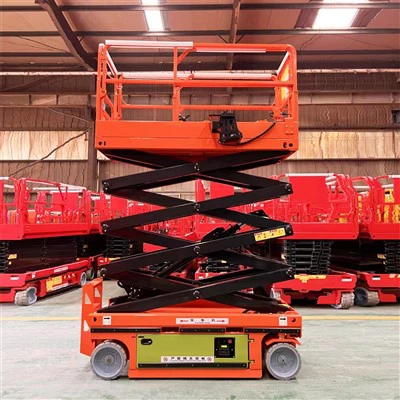
If you’re gearing up for a job and have questions about your lift’s platform specs, or what lanyards and holsters work best for your tools, don’t hesitate to reach out. We’ve got a team that knows these lifts inside and out, and we can help you figure out exactly what you need to keep your tools secure and your job running smooth. Safety isn’t an afterthought—it’s part of every job, and we’re here to make sure you’ve got everything you need to do it right.
Scissor Lift References
OSHA 29 CFR 1926 Subpart M – Fall Protection
ANSI/SIA A92.5 – American National Standard for Vehicle-Mounted Elevating and Rotating Aerial Devices
Tool Hazard Communication Guidelines for Construction and Maintenance, National Institute for Occupational Safety and Health (NIOSH)
Shandong Zhongke Huali Machinery Co., Ltd.
As one of the most professional articulated boom lift manufacturers and suppliers in China, we also support customized service. We warmly welcome you to wholesale discount articulated boom lift in stock here from our factory. For price consultation, contact us.
Address: No. 2 Qubai Road, Qudi Street, Jiyang District, Jinan City, Shandong Province
E-mail: hlizhonggong@163.com
WebSite: https://www.hualiheavy.com/
