In the dynamic landscape of the electronics industry, copper clad plates (CCPs) play a pivotal role as the fundamental building blocks for printed circuit boards (PCBs). As a dedicated copper clad plate supplier, I’ve witnessed firsthand the profound impact of technological advancements on the development of this essential product. In this blog, I’ll delve into the future trends in copper clad plate development, exploring the key factors driving change and the potential implications for the industry. Copper Clad Plate

1. High – Frequency and High – Speed Requirements
The ever – increasing demand for high – speed data transmission and communication has been a significant driver in the CCP market. With the advent of 5G technology, the Internet of Things (IoT), and artificial intelligence, electronic devices need to process and transmit data at unprecedented speeds.
High – frequency CCPs are designed to minimize signal loss and maintain signal integrity at high frequencies. These plates have low dielectric constant (Dk) and low dissipation factor (Df) properties. As 5G networks expand globally, the demand for high – frequency CCPs will continue to rise. In addition, applications such as data centers, which require high – speed servers and networking equipment, also rely on high – performance CCPs to ensure efficient data transfer.
To meet these requirements, we are investing in research and development to develop new materials and manufacturing processes. For example, we are exploring the use of advanced polymers and ceramic fillers to optimize the electrical properties of CCPs. These new materials can provide better high – frequency performance and thermal stability, which are crucial for high – end electronic applications.
2. Miniaturization and High – Density Interconnection
The trend towards smaller and more powerful electronic devices has led to a growing demand for miniaturization and high – density interconnection (HDI) in PCB design. As electronic components become smaller and more integrated, CCPs need to support finer line widths and spaces, as well as higher layer counts.
HDI CCPs enable the design of more compact and lightweight PCBs, which are essential for applications such as smartphones, wearables, and medical devices. To achieve HDI, we are developing CCPs with improved surface smoothness and dimensional stability. This allows for the fabrication of finer circuits and more precise interconnections.
In addition, the use of blind and buried vias in HDI PCBs has become more common. These vias reduce the need for through – holes, which can save space and improve the electrical performance of the PCB. As a supplier, we are working on optimizing the via formation process in CCPs to ensure high – quality and reliable interconnections.
3. Environmental Sustainability
In recent years, environmental concerns have become a major focus in the electronics industry. There is a growing demand for CCPs that are more environmentally friendly. This includes reducing the use of hazardous substances such as lead, mercury, and brominated flame retardants.
We are committed to developing CCPs that comply with international environmental regulations such as RoHS (Restriction of Hazardous Substances) and REACH (Registration, Evaluation, Authorization, and Restriction of Chemicals). In addition, we are exploring the use of recycled materials in the production of CCPs. By using recycled copper and other materials, we can reduce the environmental impact of our products and contribute to a more sustainable future.
Another aspect of environmental sustainability is energy efficiency. We are working on improving the manufacturing processes of CCPs to reduce energy consumption and waste generation. For example, we are implementing more efficient curing processes and optimizing the use of raw materials to minimize waste.
4. Thermal Management
As electronic devices become more powerful, the issue of heat dissipation has become increasingly important. High – power components such as processors and power amplifiers generate a significant amount of heat, which can affect the performance and reliability of the device.
CCPs with good thermal management properties are essential for dissipating heat from the PCB. We are developing CCPs with high thermal conductivity by incorporating thermally conductive fillers such as aluminum nitride or boron nitride. These fillers can effectively transfer heat away from the components, reducing the operating temperature of the device.
In addition, we are exploring new design concepts such as thermal vias and heat spreaders in CCPs. These features can further enhance the thermal performance of the PCB and improve the overall reliability of the electronic device.
5. Integration of New Technologies
The integration of new technologies such as flexible electronics, 3D printing, and smart materials is also shaping the future of CCP development.
Flexible CCPs are becoming increasingly popular in applications such as flexible displays, wearable devices, and automotive electronics. These CCPs can be bent, folded, or stretched, allowing for more innovative and compact device designs. We are investing in the development of flexible CCPs with improved mechanical properties and electrical performance.
3D printing technology is also starting to have an impact on the CCP industry. It allows for the rapid prototyping and customization of PCBs. We are exploring the use of 3D printing to create complex CCP structures and patterns, which can reduce the manufacturing time and cost.
Smart materials, such as self – healing polymers and shape – memory alloys, are also being considered for use in CCPs. These materials can provide additional functionality and improve the reliability of the PCB. For example, self – healing polymers can repair minor damage to the CCP, extending its lifespan.
Conclusion
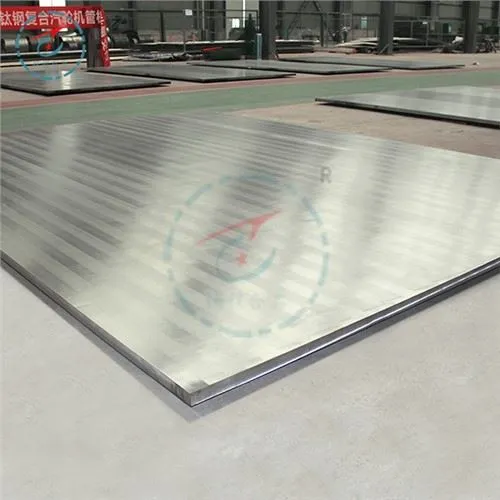
As a copper clad plate supplier, we are well – aware of the challenges and opportunities presented by these future trends. We are committed to staying at the forefront of technological innovation and providing our customers with high – quality CCPs that meet their evolving needs.
Titanium Sheet If you are in the market for copper clad plates and are interested in exploring how our products can meet your specific requirements, we encourage you to contact us for a procurement discussion. Our team of experts is ready to work with you to find the best solutions for your applications.
References
- IPC – 4101D: Specification for Base Materials for Rigid and Multilayer Printed Boards.
- IEEE Transactions on Components, Packaging and Manufacturing Technology.
- International Electrotechnical Commission (IEC) standards related to printed circuit boards and copper clad laminates.
Baoji Taicheng Clad Metal Materials Co., Ltd
As one of the most professional copper clad plate manufacturers and suppliers in China, we’re featured by quality products and competitive price. Please rest assured to buy or wholesale customized copper clad plate made in China here from our factory. Contact us for quotation and pricelist.
Address: No. 8, Taicheng Road, High-tech Development Zone, Baoji City, Shaanxi Province, China
E-mail: yangchen@bjtcjs.com
WebSite: https://www.bjtcmetal.com/
