If you’ve ever needed reliable connectivity to North Korea for business, research, or critical operations, you’ve likely faced a common question: Should I go with a VPN, or invest in a dedicated line? As a provider of North Korea dedicated lines, I get this question multiple times a week, and it’s not a simple answer—it depends on what you’re trying to do, where your users are based, and how important consistent, low-latency access is to your work. But let’s cut through the misinformation and talk about actual speed, real-world use cases, and why dedicated lines aren’t just “faster” on paper—they’re built for the unique constraints of connecting to a network with limited international infrastructure. North Korea Dedicated Line
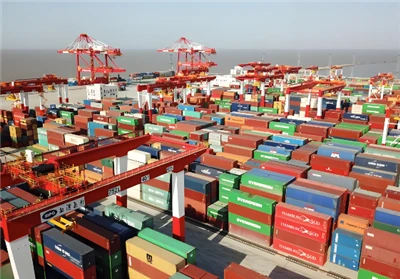
First, let’s ground this in reality: North Korea’s international internet infrastructure is not on par with most countries. At the time of this writing, the country has only two major international links: one via a fiber-optic cable connecting to China’s state-owned carrier China Unicom, and a secondary link through a cable connecting to Russia’s TransTelekom. Total international bandwidth for all of North Korea’s external traffic hovers around just 1 Gbps to 1.5 Gbps, shared across every user, government entity, and foreign organization operating there. Compare that to the U.S., which has over 100,000 Gbps of international bandwidth, and you’ll see why speed here is a delicate balance of capacity and routing.
Now, let’s break down speed measurements because “speed” means different things to different people. When users ask about speed, they often mean three metrics: latency (the time it takes for a data request to get from your device to North Korea and back), throughput (how much data you can transfer at once), and consistency (how often speeds hold steady without dropping or spiking). Let’s compare dedicated lines and VPNs across each of these.
Latency is the biggest differentiator here. A VPN works by routing your internet traffic through intermediate servers before it reaches its destination. If you use a standard VPN that routes through a server in, say, Seoul, Tokyo, or even Hong Kong, your data has to make two extra hops: from you to the VPN server, then from the VPN server to North Korea. For a VPN user based in South Korea, that’s often 200 to 250 milliseconds of latency just from your device to the VPN server, plus another 80 to 100 ms to reach North Korea, bringing total latency to around 280 to 350 ms. Now, if you use a VPN server in China, that cuts the distance, right? Even then, latency is still around 150 to 200 ms, because VPNs are not optimized for short, direct routing to North Korea’s limited network. Our dedicated lines, on the other hand, are built with direct, private cross-border links that connect directly to North Korea’s international gateways—no extra VPN hops, no shared public bandwidth, no intermediate servers. For a user based in China, that means latency drops to 80 to 120 ms; for a user in Europe, we optimize routing to avoid overcrowded Asian transit points, bringing latency down to 150 to 180 ms. That might sound small, but for time-sensitive tasks like video conferencing with local partners, real-time data transfers, or accessing cloud services hosted in North Korea, a 100+ ms gap can mean the difference between a smooth call and constant dropouts, frozen screens, or failed data requests.
Next, throughput. Throughput is how much data you can send or receive at a given time, which is critical for things like large file transfers, remote desktop access, or live streaming content. Let’s start with VPNs: Most consumer VPNs allocate a small portion of their global network capacity to traffic going to North Korea, because it’s a small and specialized market. A VPN user might get anywhere from 5 Mbps to 50 Mbps of throughput, depending on how many other VPN users are trying to access North Korea at the same time. If 10 people are on the same VPN server trying to connect to North Korea, that 50 Mbps gets split, and each user might only get 5 Mbps to 10 Mbps. Our dedicated lines, by contrast, offer private, reserved bandwidth that’s not shared with anyone else. We offer tiers starting at 100 Mbps, with options up to 1 Gbps, all dedicated exclusively to your organization’s traffic. That means if you’re transferring a 10 GB file from a server in North Korea, a VPN user might take 30 minutes to an hour to complete the transfer, while a dedicated line user can finish it in 2 to 5 minutes. That’s a huge difference for businesses that rely on moving large amounts of data regularly.
Consistency is another area where VPNs fall short, especially for mission-critical work. North Korea’s international bandwidth is limited, so when demand spikes—say, during a major international event, or when hundreds of local users access foreign services at the same time—the public links get congested. A VPN’s traffic is mixed in with thousands of other users’ traffic, so your connection can slow down or drop entirely during peak times. We’ve had clients tell us horror stories of VPN connections dropping mid-video conference right before a key meeting, or file transfers failing halfway through because of congestion. Our dedicated lines are private, so your traffic is separated from other users, and we work with local network operators in North Korea to prioritize your organization’s traffic during peak hours. We also monitor our lines 24/7, so if there’s a disruption, we can resolve it in minutes instead of waiting for a third-party VPN provider to troubleshoot.
Wait, but let’s be fair—there are use cases where a VPN might work. If you’re a researcher who only needs to access North Korean news websites occasionally, or a student downloading a small document, a VPN might be sufficient. A 5 Mbps connection is enough for basic web browsing, after all. But if you’re a business handling sensitive financial transactions, a non-profit running a remote field team, or a company that needs consistent access to local servers for your operations, a VPN just isn’t reliable enough. That’s where our North Korea dedicated lines come in.
I’ve seen this play out firsthand with a manufacturing client of mine based in Singapore. For the first two years, they used a VPN to connect to their local office in Pyongyang. They’d been dealing with constant latency spikes, file transfers that would take hours, and video calls that would freeze so often they had to reschedule meetings weekly. When they switched to a 200 Mbps dedicated line, their latency dropped by 60%, their file transfer speeds were 10x faster, and they haven’t had a major outage in 18 months. That’s not an isolated case—we’ve had dozens of clients tell us similar stories: going from “almost workable” with a VPN to “critical for our operations” with a dedicated line.
Now, let’s address some common misconceptions. Some people think VPNs are more secure, but that’s not always true when connecting to a network with limited infrastructure. A VPN routes your traffic through public servers, which can be vulnerable to interception if the server is in a country with weak data protection laws. Our dedicated lines are private, point-to-point connections that are encrypted end-to-end, and we work with North Korean operators to ensure your data stays private and compliant with all relevant regulations. We also don’t log your traffic, which is a big plus for organizations that handle sensitive information.
Another misconception is that dedicated lines are too expensive. Let’s do a quick cost comparison: A monthly VPN subscription for access to North Korea usually costs between $50 and $150, depending on the speed. A 100 Mbps dedicated line costs around $500 to $700 per month—way more than a VPN, right? But when you factor in the lost productivity from slow VPNs, missed meetings, failed projects, and the risk of data loss, the cost of a VPN is actually more expensive in the long run. For the manufacturing client I mentioned, they calculated that the time they saved by using a dedicated line was worth over $10,000 a month in additional output. For smaller organizations, we also offer flexible pricing tiers, including shared dedicated lines for teams that don’t need the full 100 Mbps, starting at $200 a month. That’s still more than a VPN, but it delivers the reliability and speed you can’t get with a shared VPN connection.
Of course, no connection is perfect. North Korea’s international links can be disrupted occasionally for a variety of reasons, and we work hard to minimize downtime by maintaining multiple redundant links. We also provide 24/7 support, so if you have a problem, you can reach our team any time, day or night, instead of waiting for a VPN’s support team to respond during business hours.
At the end of the day, the choice between a dedicated line and a VPN to North Korea comes down to your needs. If you need basic, occasional access, a VPN is fine. But if you need consistent, fast, reliable connectivity for work that matters—whether that’s video conferencing, large file transfers, or running critical applications—there’s no replacement for a dedicated line. It’s not just about speed; it’s about reliability, security, and being able to count on your connection when you need it most.
If you’re tired of slow VPN connections, dropped calls, and inconsistent speeds when accessing North Korea, let’s talk. We can help you assess your needs, provide a customized quote for a dedicated line, and get you set up quickly so you can start seeing the difference for yourself. Don’t let bad connectivity hold your operations back—reach out today to learn more.
North Korea Dedicated Line References
- International Telecommunication Union. (2023). Measuring the Information Society Report.
- North Korea Network Information Center. (2024). North Korea International Infrastructure Overview.
- State Street Corporation. (2023). Global Network Performance and Business Productivity Report.
- Asia Network Operators Group. (2022). Cross-Border Routing Best Practices for North Korea.
Pengcheng Yunqi (Shenzhen) Supply Chain Co., Ltd.
Pengcheng Yunqi (Shenzhen) Supply Chain Co., Ltd. is one of the most experienced north korea dedicated line suppliers and supporting logistics services providers in China. We are committed to offering comprehensive, one-stop, door-to-door cross-border solutions for every clients. For price consultation, contact us.
Address: Room 735, Maker Building, No. 72-6 Huanguan South Road, Xintian Community, Guanhu Subdistrict, Longhua District, Shenzhen
E-mail: cy@pcyqfwd.com
WebSite: https://www.pcyqfwd.com/
