If you’ve ever stood at a concert where the main stage seems to glow like a second sun, or walked past a storefront window where a product demo feels so lifelike you want to reach out and touch it, you’re looking at an HD LED display. As an HD LED display supplier, I get asked this question all the time: How does that magic actually work? It’s not as complicated as it sounds—though there’s a lot of precision that goes into making the image look seamless, bright, and true to what you intended it to be. Let’s break it down step by step, no jargon required. HD LED Display

First, let’s start with the basics: what HD LED stands for. LED is short for Light Emitting Diode, a tiny semiconductor that produces light when electricity passes through it. An HD LED display isn’t just one big LED lightbulb—it’s a grid of hundreds of thousands, even millions, of these individual diodes, arranged in tiny, consistent groups. Unlike older display technologies like LCD, which need a separate backlight to shine through a panel, each diode in an LED display produces its own light. That’s a big reason why HD LED displays are brighter, more energy efficient, and have deeper blacks than their predecessors.
Let’s talk about those tiny diode groups. On most HD LED displays, you’ll find what’s called an SMD LED—Surface Mount Diode. These are small enough that you can barely see them with the naked eye, and each SMD unit actually has three separate diodes inside: one red, one green, and one blue. Red, green, and blue are the primary colors of light, right? Mixing different intensities of these three can create every color you’ve ever seen, from the soft pink of a sunset to the neon yellow of a brand logo. The “HD” part comes from how close these diodes are to each other, and how many fit into a square inch. We call that pitch—the distance between the center of one SMD unit and the next. A smaller pitch means more diodes per square inch, which means a sharper, more detailed image. For example, a P1.5 display (1.5 millimeters between centers) is perfect for close-up viewing, like at a corporate conference where people are sitting just a few feet from the screen, while a P10 display is great for a sports stadium where fans are standing hundreds of feet away. I remember when we first installed a P2 display for a tech company’s boardroom—their team was shocked at how crisp their product demo looked, even when leaning right up to the screen. That’s the pitch making all the difference.
Now, how does the display actually get the signal to show that image? It all starts with a source: a computer, a video player, a camera, whatever you’re using to send content. That content is converted into a digital signal, which is just a bunch of numbers representing the color and brightness of every tiny part of the screen. For an HD LED display, that signal is split up to match the grid of diodes. Each row and column of diodes has a small control card, sometimes called an LED driver or a controller, that receives a tiny slice of the digital signal. This card tells each individual SMD unit how bright to make its red, green, and blue diodes at any given moment. It works super fast—like, millions of times per second fast—so the image never flickers to the human eye. That’s important for things like video, where even a tiny lag or flicker would look choppy.
Here’s where a lot of people get curious: about refresh rate and grayscale. Refresh rate is how many times per second the display updates the image, measured in Hertz (Hz). A higher refresh rate means a smoother image, which is critical for live sports, concerts, or any content with fast movement. Cheap LED displays might have a low refresh rate, leading to that annoying blurring effect when something moves across the screen. All our HD LED displays have a refresh rate of at least 1920 Hz, some even 3840 Hz, which makes even the fastest action look crisp. Grayscale is how many different brightness levels each color can have. If a red diode only had two levels—on or off—you’d have solid red or no red, no in-between. Our diodes can handle up to 16,000 brightness levels per color, which adds up to over 281 trillion possible colors. That’s why a face on our display looks like a real person, not a flat cartoon—you can see the subtle pink of the cheeks, the gray of a shadow, the blue of the eyes, all in perfect detail.
Another big advantage of HD LED displays is their brightness. Outdoor displays, like the ones you see on a highway billboard or a stadium scoreboard, need to be bright enough to see in direct sunlight. Our outdoor HD LED displays put out up to 5,000 nits of brightness—for context, a regular laptop screen is around 300 nits. That means even on a sunny day, you don’t have to squint to read the text or see the image. Indoor displays don’t need to be that bright, so we can tune them down to save energy and reduce eye strain for people sitting close. That flexibility is one of the reasons we work with so many different clients—from retail stores to corporate offices to event planners.
Wait, what about seamless images? Early LED displays had visible gaps between the panels that made the whole screen look like a grid, not a single image. Today’s HD LED displays use tight-fitting panels, often with narrow bezels (the frame around the screen), and when you put multiple panels together, the gap between them is less than a millimeter. You literally can’t tell where one panel ends and the next begins. We had a client a few years ago who wanted a 20-foot wide display for their product launch, and when we installed it, the first question they asked was “where’s the seam?” They’d walked through our showroom and thought we’d given them a single large display, not a grid of panels. That’s the seamless HD experience our team works hard to deliver.
Power efficiency is another thing I love about HD LED displays. Back in the day, big video walls would drain electricity like crazy, running up huge utility bills. Because each diode only produces light when it’s supposed to—no backlight wasting power—and we use high-quality semiconductors that convert electricity to light very efficiently, our displays use about 50% less energy than comparable LED or LCD video walls. For example, a 100-square-foot HD LED display uses roughly the same amount of power as a single household oven, which is a huge plus for businesses looking to cut costs without sacrificing quality.
Now, let’s talk about the parts that keep the display running smoothly, because a display is only as good as its components. We source our diodes from trusted manufacturers that test every single diode for brightness and color consistency—we don’t cut corners here. If one diode is a little dimmer or a little more red than it should be, it can throw off the whole image, especially when you’re looking at it up close. The control cards are also critical—they need to be reliable, because if one card fails, a whole section of the screen goes dark. We use industrial-grade control cards that are built to last, even in harsh environments like outdoor events or busy retail spaces. We also include built-in temperature sensors and cooling fans, because diodes can overheat if they run too long, and overheating is the number one cause of LED display failure. That’s why our displays have a long lifespan—we’re talking 100,000 hours of use, which is over 11 years of continuous operation, and way longer than most other display technologies.
I’ve seen HD LED displays used for all kinds of projects over the years, and each one teaches me something new. Last year, we installed a display for a museum’s ancient Egypt exhibit. The curator wanted the display to look like a stone wall carved with hieroglyphs, so we calibrated the diodes to have subtle variations in brightness, just like real stone, and the colors matched the pigment on real artifacts. Visitors would stop and stare, trying to tell the difference between the display and the actual carvings. That’s the power of HD LED technology—it’s not just a screen, it’s a way to bring content to life.
Another project was a small HD LED display for a coffee shop’s menu board. The owner wanted to update their menu daily, and they didn’t want to deal with printing new posters every week. We installed a P1.8 display behind the counter, which is bright enough to read even in the bright shop lights, and they can update the menu from their phone in two minutes. No more wasted paper, no more messy tape on the wall—just a crisp, easy-to-read menu that can change anytime. That’s the practical side of HD LED displays, for small businesses too, not just big stadiums or concert stages.
So, putting it all together, how does an HD LED display work? It’s a coordinated system of millions of tiny, color-producing diodes, controlled by fast, precise cards that turn digital signals into light, calibrated to show every color and detail perfectly, all built to be bright, efficient, and long-lasting. It’s not magic, but it feels like it when you see a concert stage display that makes the band look like they’re right in front of you, or a retail window display that makes a new product sell out in days.
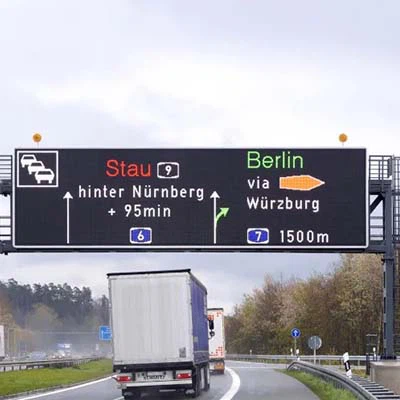
If you’re thinking about adding an HD LED display to your space—whether it’s for your store, your office, an event, or something else entirely—I’d love to chat. We can walk through your needs, from size to viewing distance to environment, and find the right display that fits your budget and your goals. Every project is different, and we’re here to help you make the most of this technology. Don’t hesitate to reach out to start the conversation about your next HD LED display project.
Outdoor LED Billboard REFERENCES
- "LED Displays: How They Work and Key Terms to Know". Digital Signage Today.
- "The Science Behind HD LED Display Technology". Display Daily.
- "Light Emitting Diodes (LEDs) Basics". Electronics Hub.
Shenzhen MileStrong Technology Co., Ltd.
Shenzhen MileStrong Technology Co., Ltd. is one of the most professional hd led display manufacturers and suppliers in China, specialized in providing the best customized service. We warmly welcome you to wholesale bulk high quality hd led display at competitive price from our factory.
Address: ileStrong Headquarters & Showroom 4/F, Building B15, Phase II, Xincheng Chuangzhi Industrial Park, No.456 Heping Road, Furong District, Changsha, Hunan, China
E-mail: marketing@mile-strong.com
WebSite: https://www.milestrongled.com/
