Last month, I got a frantic call from a regular customer—she’d just had a crew come to trim the massive oak in her front yard, and the wood guys had accidentally nicked the thin, tender bark at the base, gouging a two-inch strip down to the cambium layer. “I should’ve known better,” she said, “but I thought the tree would just grow around it.” Unfortunately, that’s a mistake I hear all the time from homeowners, landscapers, even fellow small business owners. For years, I’ve been selling wire mesh fence to folks fixing up their properties, and one question I get more than any other is: How do I put a fence around a tree without killing it? Not just any fence—wire mesh, which is the most durable, low-maintenance option for protecting tree bases from lawnmowers, trimmers, curious dogs, and even construction debris. Wire Mesh Fence
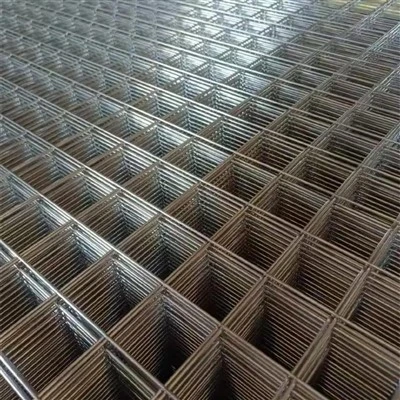
Today, I’m pulling back the curtain on the process I walk every customer through when they call with that exact question. I’m not here to sell you a random fence—this is the step-by-step, science-backed method we’ve refined over 12 years in the wire mesh business, after fixing more botched tree fence installs than I can count. No fancy tools, no complicated math, just practical stuff that keeps both your tree and your new fence happy.
Let’s start with the basics that almost everyone gets wrong: the tree itself. Wire mesh fence isn’t a one-size-fits-all product, and neither is the space around a tree. First, you need to figure out two key measurements: the diameter of your tree’s canopy (that’s the spread of leaves and branches above ground) and the size of the root flare. The root flare is that thick, widening section at the base of the tree where the trunk meets the roots—this is where 90% of a young or stressed tree’s nutrient and water intake happens, and it’s super sensitive to being crushed, covered, or constricted. The general rule of thumb from arborists (yes, I check this stuff every week) is that your wire mesh fence should sit at least 2 feet wider than the canopy, all the way around. That gives roots room to grow, and it keeps lawn equipment a safe distance from the trunk base.
I’ve seen folks put a fence 6 inches from the trunk because they “don’t have space,” and within two years, the tree starts yellowing, dropping leaves, and eventually dies. Why? Because wire mesh is rigid, and as the tree grows, it will press against the fence, girdling (cutting off) the cambium layer of the trunk. The cambium is that thin, green layer just under the bark—if it’s damaged all the way around, the tree can’t transport water or nutrients up and down, and it dies. So leaving extra space isn’t just for the fence—it’s for the tree.
Next, choosing the right wire mesh. This is where I see the most missteps from people who go to a big box store and grab whatever’s cheapest. For tree protection, we sell two main types of wire mesh, and I always match them to the customer’s needs. First, there’s galvanized chain-link mesh, which is great for large trees in yards with active dogs or kids. The 2-inch by 2-inch gauge is standard—small enough to keep a dog from squeezing through, flexible enough to move a little as the tree grows. Second, there’s welded wire mesh, which is lighter, more affordable, and perfect for smaller trees, ornamental specimens, or areas where you don’t want a bulky chain-link look. The 1-inch by 1-inch welded is ideal for keeping out rabbits and small rodents, which love chewing on young tree bark in winter.
A common question: do you need a top rail or bottom rail? For tree fences, no—rails will constrict the tree trunk over time. You just need flexible mesh that can expand as the tree grows. Now, let’s talk tools. You don’t need a huge list—just a tape measure, a pair of bolt cutters (or wire cutters, for smaller mesh), 4 to 6 steel T-posts (one every 3 to 4 feet around the circle), a rubber mallet, and some zip ties or galvanized wire to secure the mesh to the posts. That’s it. No concrete, no digging deep holes—we’re keeping this as minimally invasive as possible for the tree.
Now, the step-by-step process. I always tell customers to start with marking the perimeter, because this is where the mistake of “too tight” happens. Grab your tape measure, measure from the root flare all the way out 2 feet, and mark that distance with stakes every 3 to 4 feet around the tree. So if your tree’s root flare is 3 feet wide, you’ll be marking at 5 feet from the center of the trunk, making a perfect circle. This is non-negotiable—don’t eyeball it. I’ve had a customer last year who measured wrong, put the fence 18 inches from the trunk, and called me panicking when she noticed the tree was already starting to push against the wire. We had to adjust it, which meant cutting and reattaching the mesh, and she still lost a small section of bark. Save yourself the hassle—measure twice.
Once your perimeter is staked, it’s time to set the T-posts. T-posts are perfect here because they’re thin, so they won’t damage roots if you set them correctly. For each post, dig a small hole 6 inches deep (max!) right at the stake mark. Why only 6 inches? Most tree roots grow within the top 12 inches of soil—digging deeper will sever feeder roots, which can stress the tree for months. If you hit a root when digging, move the post 6 inches in either direction. Don’t force it—roots are fragile, and damaging them is way worse than a post that’s slightly off the line. Once the hole is dug, drive the T-post into the ground using the rubber mallet, until it’s 12 to 18 inches above the soil. That’s tall enough to keep lawnmowers and trimmers from reaching the base of the tree, and short enough to not be an eyesore. Set all posts first, and double-check that they’re all the same height—nothing looks worse than a lopsided fence around a pretty tree.
Now, the part everyone gets wrong: installing the wire mesh. Roll out your wire mesh along the line of posts. Start at one post, and leave about 6 inches of extra mesh at the first end. Secure the mesh to the first post using a zip tie or a piece of galvanized wire wrapped around the top and bottom of the post, twisted tight. Now, pull the mesh around the circle to the next post—don’t stretch it tight. Leave 1 to 2 inches of slack between each post. This is critical. I can’t stress this enough. Trees grow, and the mesh needs room to expand. If you pull the mesh tight around the posts, as the tree trunk gets thicker, the fence will constrict it, just like a too-tight belt. That’s the number one cause of tree death after fence installation. Once you reach the last post, overlap the two ends of the mesh by 6 inches, and secure them together so the whole circle is closed.
Wait, what about the bottom of the mesh? Should you bury it? A lot of people ask this, and the answer depends on your environment. If you have rabbits, deer, or other small animals that chew on tree bark, you can bury the bottom 2 inches of mesh by gently tucking it into a small trench you dig around the posts. Don’t dig a deep trench—just enough to cover the bottom edge. If you don’t have that problem, you can leave the bottom of the mesh resting on the soil, or even pin it down with small stakes if there’s a lot of wind. The key here is to never let the mesh sit directly on the trunk—leave at least 3 inches of space between the wire and the bark, all the way around. That gap is non-negotiable.
Now, what about maintenance? A wire mesh fence around a tree doesn’t need much, but there are a few things to check every year. First, in early spring, walk around the fence and make sure the mesh hasn’t started to touch the trunk. If it has, you can adjust the posts or add a little more slack to the mesh. Second, check the zip ties or wire that secures the mesh to the posts—if they’ve rusted or broken, replace them. Third, if you have a chain-link fence, you can spray it with a rust-resistant spray every 2 to 3 years, though our galvanized mesh is coated to prevent rust, so it’s pretty low-maintenance. And finally, never mow within that 2-foot gap around the tree. Use a string trimmer on the outer side of the fence, never the inner. I see so many people trim right up to the trunk, and the trimmer blades nick the bark, which leads to disease.
Last month, I followed this exact process with a customer who had a 40-year-old maple in her backyard that had been repeatedly nicked by lawnmowers. She’d tried plastic tree guards, but they rotted after a year. We installed 2-inch galvanized welded mesh, set the posts 6 inches deep, left 2 inches of slack, and left a 3-foot gap between the tree and the fence. Three months later, she sent me a photo—her tree is putting out new growth, and the fence is still looking great. That’s the result we aim for: a fence that protects the tree, not hurts it.

I’ve been in the wire mesh business long enough to know that this isn’t just about selling a product. It’s about making sure trees stick around for decades, and homes stay beautiful. If you’re thinking of installing a wire mesh fence around a tree, or you’re not sure which type of mesh is right for your tree, reach out to our team. We’ll walk you through measurements, recommend the right mesh for your needs, and even share a few pro tips to make the install go smooth. No pressure, no pushy sales talk—just real advice from folks who do this every day. Whether you’re protecting a young sapling or a mature tree that’s been in your family for generations, we’re here to help you get it right.
Post Fence References
- "Tree Protection for Landscapers." International Society of Arboriculture, 2022.
- Wire Mesh Fence Installation Best Practices. American Fence Association, 2021.
- Root Protection During Site Development. USDA Forest Service, 2020.
- Safe Tree Barriers: Balancing Protection and Growth. Arborist News, Vol. 30, No. 4, 2023.
Anping Binze Wire Mesh Products Co., Ltd.
We are one of the most experienced wire mesh fence manufacturers and suppliers in China, also support customized service. Please feel free to buy high quality wire mesh fence for sale here from our factory. For price consultation, contact us.
Address: Taicheng Industrial Zone, Anping County, Hengshui City, Hebei Province
E-mail: binzemesh@outlook.com
WebSite: https://www.binze-mesh.com/
