Alright, let’s cut to the chase – if you’ve stumbled on this post, you’re probably staring at a busted stormwater grate in your parking lot, alley, or neighborhood street and wondering if you can fix it yourself (or if it’s worth calling a pro). As a stormwater grate supplier, I’ve spent years talking to property managers, handymen, and even homeowners who’ve tried everything from jamming rocks in the holes to half-assed welding jobs that fell apart after a week. Let’s break this down like we would over a coffee at our shop – no fancy jargon, just stuff that actually works, plus the real tea on when to fix vs. replace, and why cutting corners here is a bad call. Stormwater Grate
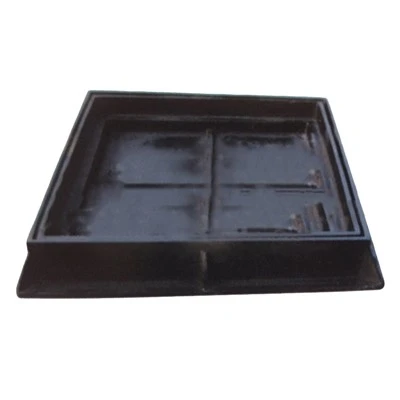
First, let’s get one thing straight: a broken grate isn’t just an eyesore. It’s a hazard. I’ve heard way too many stories of kids tripping into a gap that used to hold a grate, or a delivery driver’s wheelchair wheel slipping into a crack, or rainwater pooling so bad it turns into a slip-and-fall lawsuit waiting to happen. So before you grab that random piece of metal from your garage, let’s go through the steps the right way – and remember, I’m the guy who sells these grates, so I’m not here to tell you to buy a $500 new one if a $20 fix will work (but I’m also not gonna lie and say a band-aid fix will last 5 years).
Step 1: Assess the Damage (Don’t Waste Time On Repairs That Won’t Stick)
The first thing to do is pop that broken grate up (pro tip: use a pry bar – don’t hurt your back with a crowbar) and lay it flat on the ground. Walk around it, run your hands over every edge, check the spaces between the bars (those are called voids, by the way – we use that term ‘cause it’s precise, not ‘cause we’re snobs). Here’s what I see most often that’s actually fixable:
- A single bent bar: Usually from a heavy truck driving over it too fast, or a lawnmower blade catching it. This is easy to bend back – just use a big pair of vice grips or a hydraulic jack if it’s super stubborn.
- A small crack in the metal frame (not the whole frame splitting): Most grates are cast iron or ductile iron, so a crack up to 2 inches is repairable.
- One or two missing cross-bars (the bars that run perpendicular to the main load-bearing bars): If you can get a steel rod of the same thickness, that’s fixable.
Now, the stuff you shouldn’t waste time fixing:
- The grate is split down the middle, or the frame is cracked so bad it wobbles when you push it. I’ve seen people weld those, and 9 times out of 10, it breaks again within a month. Metal fatigue is real – cast iron gets brittle over time from freeze-thaw cycles, so a crack that’s 4 inches long is basically a death sentence for the grate.
- Half the bars are bent or missing. Why waste time when a new grate will last 10+ years?
- The grate is rusted through in multiple spots. That’s not a repair – that’s a replacement.
Also, quick check: what’s the grate made of? We sell mostly ductile iron grates ‘cause they’re way tougher than regular cast iron, but some cheaper ones are steel, and some are even plastic for light-duty areas like sidewalks. Plastic grates? If they break, just replace ’em – welding plastic is a pain and never holds up to snow plows or heavy foot traffic.
Step 2: Gather Your Supplies (No B.S. Stuff You Probably Already Own)
Once you know it’s fixable, grab these – no need for a fancy toolbox:
- For bent bars: Vice grips (the big, heavy-duty ones, not your DIY tiny ones), a rubber mallet, maybe a pipe to use as a cheater bar for extra leverage (don’t use a steel hammer – it’ll dent the grate).
- For small cracks: A MIG welder (stick welders are okay but MIG is way easier for beginners), a wire brush to clean the rust off the crack, some metal welding rods that match the grate’s material (ductile iron rods for our grates, regular steel if it’s a steel grate).
- For missing cross-bars: A steel rod that’s the same diameter as the original bars (you can measure it with a caliper, or just bring a sample bar to your local hardware store), a hacksaw or angle grinder to cut it to length, and a welder to attach the ends.
- Bonus: Anti-rust spray (we use cold galvanizing spray – it’s cheap and stops rust from spreading fast), and a concrete anchor if the grate’s frame is loose in the catch basin (wait, yeah – sometimes the frame itself is shifted, so you need to fix that before putting the grate back).
Wait, if you don’t know how to weld? No shame. There are a ton of YouTube tutorials that make it super easy for small jobs, and most hardware stores rent MIG welders for like $20 a day. Just don’t skip cleaning the rust off the crack – if you weld over rust, it’ll bubble and break in a week. That’s a mistake I see people make all the time.
Step 3: Fixing Common Issues (The Real, Hands-On Steps)
Let’s dive into the specific fixes, ‘cause I don’t want you guessing.
Fixing a Bent Bar
This is the easiest one. Let’s say a truck hit one of the main bars that runs front-to-back (that’s the load-bearing bar, by the way – the one that supports the weight of cars). First, stabilize the grate so it doesn’t move – you can stick a few rocks under the other side, or have a friend hold it if it’s small. Grab your vice grips, clamp them tight to the bent part, and bend it back slowly. Don’t yank it – go slow, stop every inch or so, ‘cause metal can snap if you force it too hard. If it’s super stubborn, stick a pipe over the vice grip’s handle to get more leverage, then hit the bent side gently with a rubber mallet as you push back. Once it’s straight, run your hand along it – it should be smooth, no kinks. If there’s a tiny bend left, that’s fine – it won’t affect the strength. We straighten bent bars all the time in our shop, and they hold up way better than a cheap replacement grate you’d buy at a big box store.
Fixing a Small Crack in the Frame
Okay, this one is a little trickier, but totally doable. First, use your wire brush to scrub the crack and an inch around it – you need all the rust and dirt gone, ‘cause the weld won’t stick to gunk. Then, take your MIG welder, set it to the right amperage (check your welder’s manual – for 1/2 inch iron, around 150 amps works for most entry-level welders). Start at the end of the crack, weld a tiny bead, then move slowly along the crack. If the crack is long, weld from both ends to the middle – that prevents the metal from warping. Once you’re done, grind the weld flat with an angle grinder so it’s smooth. Then spray the whole frame with cold galvanizing spray – rust is the number one killer of stormwater grates, so sealing that weld is non-negotiable.
Replacing a Missing Cross-Bar
Cross-bars are the ones that run left-to-right, connecting the load-bearing bars. If one’s missing, your grate is gonna flex when weight hits it, so you gotta put a new one in. First, measure the distance between the two load-bearing bars – cut your new steel rod 1/8 inch shorter than that, so it fits snug. Then, clean the ends of the cut rod and the holes in the load-bearing bars with your wire brush. Now, hold the rod in place, and weld both ends to the load-bearing bars. Don’t just tack-weld – do a full bead around the entire rod where it meets the load bar. Once it cools, give it a tug to make sure it’s secure. Again, hit it with anti-rust spray to keep it from rusting through quickly.
The Big Mistakes To Avoid (I’ve Seen ’Em All)
Let me hit you with the stuff that’ll make your repair fail faster than you can say “stormwater.”
- Don’t use regular wire or a random bolt to fix a missing bar. That’s a hazard – a bolt will slip out, and someone will get hurt. Use a steel rod that’s the same thickness as the original.
- Don’t skip cleaning rust before welding. I can’t stress this enough – if you weld over rust, the weld will be weak and break. I’ve had customers bring grates back that did this, and we had to replace ’em for free.
- Don’t fix a grate that’s beyond repair. Last year, a property manager brought in a grate that was split so bad it bent in half when he lifted it. He tried welding it, and it broke the next day when a delivery van drove over it. He ended up buying a new one from us, and saved himself the hassle of another call.
- Don’t forget to check the catch basin while you’re at it. A lot of broken grates aren’t just the grate – the catch basin under it is full of leaves and debris, so when you fix the grate, the water can’t drain. Grab a shovel and scoop out the muck – it takes 5 minutes, and it’ll make your repair actually work.
When To Just Buy A New Grate (And Why It’s Worth It)
I’m in the business of selling grates, but I’d never tell you to buy one if a repair works. But here’s the thing: a quality ductile iron grate from us costs around $150-$300, depending on size, and it’ll last 20+ years. If you spend 3 hours fixing a busted grate every year, that’s $450 in your time (not to mention the hassle) – way more than a new grate. Plus, new grates come with the right void size for stormwater drainage, so you won’t have pooling water. And we make them with safety in mind – no sharp edges, extra load bars for heavy traffic.
Quick Pro Tips From The Shop Floor
- If you’re in an area with lots of snow plows, get a ductile iron grate – regular cast iron will crack every winter from plow blades hitting it.
- For sidewalk grates that only get light foot traffic, a steel grate is fine – cheaper than iron, and it lasts 10-15 years.
- If you have a broken grate in a high-traffic area (like a grocery store parking lot), don’t mess with a repair – replace it. The liability isn’t worth it.
- We offer custom grates too, if you have a weird-sized catch basin – just shoot us a message, no pressure.
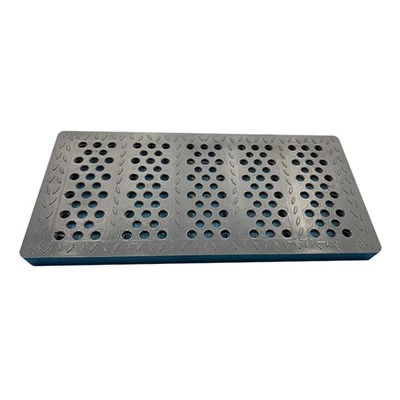
Now, before I wrap this up, let’s circle back to why this matters. Stormwater grates aren’t just metal grids – they’re a key part of keeping streets safe, preventing flooding, and keeping debris out of our water systems. A busted grate isn’t just a DIY project – it’s a small responsibility to your neighborhood, your business, and anyone who uses that street.
Stormwater Grate If you tried this fix and it worked, or if you’re still on the fence about whether to repair or replace, feel free to reach out to us for a chat. We don’t do pushy sales – we just sell grates that last, and we’re happy to answer any questions, help you measure your catch basin, or even walk you through the repair if you’re stuck. No stress, no fancy lingo, just real people helping with real problems.
References
- National Association of City Transportation Officials (NACTO). 2021. Urban Street Design Guide: Stormwater Infrastructure.
- American Society of Civil Engineers (ASCE). 2020. Report Card for America’s Infrastructure: Stormwater Systems.
- Local Government Commission. 2019. Low-Impact Development: Stormwater Best Practices.
- World Health Organization (WHO). 2018. Safe Streets for All: Pedestrian and Cyclist Safety Guidelines.
Changxing Jianguo Ductile Iron Manhole Cover Factory
As one of the most professional stormwater grate manufacturers and suppliers in China, we also support customized service. Please rest assured to wholesale bulk durable stormwater grate in stock here from our factory. Welcome to contact us for quotation.
Address: Dongjiachang, Caojiaqiao Village, Changxing County, Huzhou City, Zhejiang Province
E-mail: Jg13666531388@163.com
WebSite: https://www.jianguomanhole.com/
