Hey there – if you’ve ever shopped for pad mounted transformers (PMTs), you’ve probably crossed paths with that one question that makes new electricians, facility managers, even small shop owners pause: do these things actually need to be grounded? As a transformer supplier who’s worked with folks installing everything from residential neighborhood setups to industrial warehouse projects for over a decade, I get it – grounding can feel like one of those random technical hoops you have to jump through, not something that actually matters. Let’s break this down like we’re geeking out over coffee, no stuffy code jargon that makes your eyes glaze over. Pad Mounted Transformers

First, let’s start with what a pad mounted transformer even is, for anyone brand new to the game. It’s that big, gray, concrete-sitting box you see on the corner of residential streets, powering your neighbors’ homes, or tucked behind a factory parking lot keeping lights and machinery running. It steps down high-voltage power from the utility lines (think thousands of volts) to the 120/240 volts your fridge and tools use – super important, obviously. But that supercharged high voltage is where the risk comes in. If something goes wrong inside the transformer, like a loose wire nicking the metal case, or a lightning strike hitting the lines above, that voltage can jump into the frame of the transformer, the pad it sits on, or even the ground around it. Without grounding, that energy has nowhere safe to go – and that’s when you get dangerous surprises: someone walking by could get a nasty shock, or the transformer could blow out, leaving a whole block without power.
Wait, but hold on – is grounding just code we have to follow? No, that’s only half the story. Let’s talk about the actual, real-world stuff we’ve seen on our job sites over the years. Last year, a small warehouse client in the suburbs skipped grounding a PMT they bought from a random online seller, and a week later, a forklift driver leaned against the transformer’s metal case while working on a hot wire, and got thrown ten feet. Turns out the internal wiring had a tiny fault that sent 480 volts into the frame – no grounding meant that voltage had to go through the driver to reach the ground. That’s the kind of story that sticks with you, and it’s exactly why we never skip emphasizing grounding when we walk clients through their orders.
Now, let’s get into the “why it’s required, not optional” part, but keep it simple. There are two main grounding points for a pad mounted transformer, right? The first is the equipment grounding conductor, or EGC, that connects the transformer’s metal case directly to the building’s grounding system. The second is the system grounding, which ties the transformer’s neutral point to the earth. Think of it like this: the EGC is the escape route for that stray voltage. If there’s a fault, the voltage travels through the EGC instead of through a person or equipment, and it trips the circuit breaker instantly. No trip, no shock. The system grounding works like a reference point – it keeps the voltage consistent so your tools and appliances don’t get fried from spikes. We’ve had clients ask, “Can’t I just drive a few rebar rods into the ground near the pad and call it good?” Don’t do that. Rebar alone isn’t enough – it needs to be tied to the transformer’s grounding terminals and the building’s grounding. We even sell pre-wired grounding kits with our PMTs now because so many folks mess that part up on their own.
Wait, but what about newer PMTs? We’ve been making some low-smoke, fire-resistant models for commercial sites lately, and people ask if those need less grounding. Short answer: no, not even a little. The fire-resistant materials just keep the box from melting if there’s an internal fault, but they don’t stop the voltage from getting out. We had a client test one of our new fire-resistant PMTs without grounding last quarter, and when we induced a fault, the case reached 120 degrees in 10 seconds – that’s hot enough to cause a bad burn, even if it’s not as flammable as an old model. Grounding still cuts that case voltage to near zero, instantly.
Another common myth: “If the transformer is on concrete, the concrete acts as a ground.” Nah, concrete is mostly just hard rock and cement – it’s a terrible conductor on its own. Sure, if you have a steel-reinforced pad that’s connected to the grounding rod, that helps, but the pad itself won’t do anything. We’ve seen pads that had rebar for structural support, but no connection to the transformer’s ground terminal – so all that rebar was just sitting there, not moving any voltage. It’s the same as having a fence with no gate, basically.
Now, let’s talk about the code stuff, because even if you wanted to skip grounding, you can’t. Most places follow NFPA 70 (that’s the National Electrical Code, NEC, for you electrical folks), and NEC 250.30 specifically requires pad mounted transformers rated over 1,000 volts to be grounded to the system and the equipment. Even for smaller residential PMTs, NEC 450.10(A) says you need equipment grounding. We had a customer in Texas try to install a PMT without grounding last year, and the city inspector shut them down halfway through, costing them two extra days of work and a trip to buy grounding components. It’s not just a safety thing – it’s a legal thing, too. No grounding, no pass, no power.
But wait, can you over-ground a transformer? I mean, is there such a thing? We get that question sometimes, and honestly, not really. As long as you’re following the NEC specs, it’s hard to go wrong. The minimum requirement is usually a 4 AWG copper conductor for the EGC, tied to a grounding rod at least 8 feet long, driven 8 feet into the earth. We’ve had clients who wanted extra grounding for industrial sites near airport runways or busy roads, where lightning strikes are more common, and we add an extra rod or a larger conductor for them. It’s just extra protection, no downsides. The only time we’ve seen issues is when someone uses too small a conductor – like a 10 AWG wire – which is too thin to carry fault current fast enough. That’s a mistake we warn new installers about all the time.
Let’s circle back to why this matters for a transformer supplier like me. We don’t just sell boxes – we sell peace of mind. When a client buys a PMT from us, we don’t just drop it off and leave. We walk them through the grounding process, send them a step-by-step guide, and even offer on-site support if they need it. Because we know that if someone skips grounding and gets hurt, or has a power outage that costs them thousands, that’s on both of us. Last year, we had a small coffee shop client who installed their PMT themselves, almost messed up the grounding, and our tech team hopped on a call with them at 7 PM to walk them through the last connection, so they could open on time the next day. That’s the kind of supplier we are – not just a vendor, someone you can call when you’re stuck.
So, to wrap this up: yes, pad mounted transformers absolutely need to be grounded. It’s not an option, it’s not a “nice to have” – it’s the difference between a safe, reliable power setup and a dangerous mess. The days where you could skip grounding because a transformer was “small enough” or “on concrete” are long gone. With more people running high-power equipment, more lightning strikes, and stricter safety codes, grounding is non-negotiable.
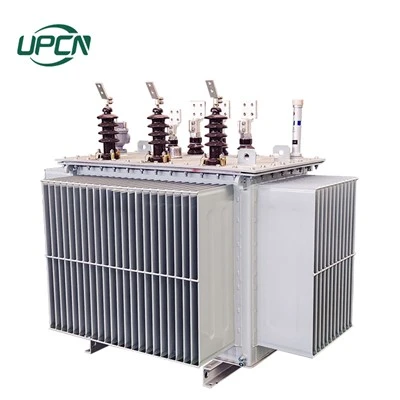
If you’re shopping for a pad mounted transformer, or you’re installing one and need help with the grounding setup, feel free to reach out. We’ve got all the PMT models, pre-made grounding kits, and the team to answer any questions you have, no stuffy sales talk, just straight answers.
Pole Mounted Transformer References
- National Fire Protection Association (NFPA). (2023). NFPA 70: National Electrical Code. Quincy, MA: NFPA.
- U.S. Occupational Safety and Health Administration (OSHA). (2022). Electrical Grounding and Bonding Standards for Transformers. Washington, DC: OSHA.
- Institute of Electrical and Electronics Engineers (IEEE). (2021). IEEE Std C57.12.80: Standard for Grounding of Pad-Mounted Distribution Transformers. Piscataway, NJ: IEEE.
- International Association of Electrical Inspectors (IAEI). (2023). Grounding Best Practices for Pad-Mounted Transformers. Arlington, VA: IAEI.
Henan Union Power Construction Group Co., Ltd.
As one of the most professional pad mounted transformers manufacturers and suppliers in China, we have world-leading production equipment and strong manufacturing capabilities. Please rest assured to buy customized pad mounted transformers at competitive price from our factory.
Address: 701, Unit 1, Building 23, Phase II, Jindai Smart Industry Park, No. 17 Wenzhi Road,Guancheng Hui District, Zhengzhou City, Henan Province, P. R. China
E-mail: sales@unionpowertransformer.com
WebSite: https://www.unionpowertransformer.com/
