If you’re here, chances are you’re staring at a project that needs a low voltage transformer — maybe it’s for a small commercial LED sign, a 24V security camera setup, a workshop control circuit, or even a tiny off-grid cabin. And let’s be real, picking the wrong one can turn a quick install into a headache real fast: too little power, and your gizmos die mid-job; too much, and you’re wasting energy or risking damage. As someone who’s been supplying low voltage transformers for years, I’ve lost count of how many times customers come to us with questions that boil down to “wait, do I actually need this?” So let’s break this down like we would in a workshop, no stuffy engineering jargon, just what actually matters for your specific application. Low Voltage Transformer

First, let’s get the basics straight: a low voltage transformer (for our purposes here, that’s 600V or less, which covers almost every residential, commercial, light industrial job you’ll run into) does one core job: takes your standard wall voltage (120V or 240V AC, depending on where you are) and steps it down to a safer, lower voltage — think 12V, 24V, 48V, whatever your device calls for. But the key word here is “specific application” — one size does NOT fit all, and that’s where people mess up. I’ve had a customer last month come in wanting a transformer for a string of 12V outdoor LED lights; they grabbed the first one that fit the voltage, but it was a cheap, dry-type transformer meant for a doorbell, not the long, continuous load of LED strings. It overheated after three days. So let’s start with the first step: know your load inside and out.
Wait, what’s a load? That’s every device that runs off your transformer. For lights, that’s the total wattage of all bulbs. For cameras, it’s the power draw of each unit (check the label — that’s usually in watts or amps; if it’s amps, multiply by your low voltage to get watts). For control circuits (like in a small bakery’s mixer controls), it’s the sum of all the relays, sensors, and motors that will run at once. The golden rule here: your transformer’s rated wattage needs to be 10-20% higher than your total load. Why? Because transformers aren’t 100% efficient — they lose a little power as heat — and if something draws a tiny bit more than expected (like a bulb at startup, which is way higher than its runtime wattage), you won’t trip the transformer or cause it to fail. I always tell customers: round up, not down. If your total load is 150W, don’t get a 150W unit — go for 165W or 180W. That extra buffer is worth the few bucks you’ll spend, versus replacing a fried device or a burnt transformer.
Next, voltage matching. This sounds obvious, but I’ve seen it go wrong so many times. If your LED lights need 12V, a 24V transformer won’t just dim them — it’ll blow them out in minutes. On the flip side, a transformer that steps down to 18V for your 12V device will run hotter, drain your device faster, and could shorten its life. Here’s a pro tip: if you’re running multiple devices that need different low voltages, you might not need multiple transformers — wait, no, actually, hold on. No, don’t mix voltage requirements on one transformer. That’s a recipe for disaster. If you have 12V lights and 24V security cameras, you need two separate transformers, or a multi-tap transformer that lets you switch taps for different voltages. Multi-tap units are great for light industrial jobs where you might adjust loads down the line, but for a simple residential job, a single-voltage transformer is cheaper and easier. Also, double-check your input voltage: if your building uses 240V (like in Europe or parts of the US), make sure your transformer is rated for that, not 120V. It sounds dumb, but I’ve had customers plug a 120V transformer into a 240V outlet and smoke it before they even finished turning the wrench.
Now, environment — this is the part most people skip, and it’s where transformers die early. Is your transformer going inside a dry utility closet? Or is it mounted outside, exposed to rain, snow, and temperature swings? For outdoor or damp locations, you need an encapsulated transformer — the windings are sealed in a epoxy or resin coating, so moisture can’t get in. Dry-type transformers (no seal) are fine for inside, but leave them outside, and within a year they’ll corrode or short. What about dusty or dirty spaces, like a workshop or a farm? Encapsulated is still better, but you might also want a unit with a NEMA 3R or NEMA 4 rating — those are for areas with dust, splashes, or even occasional hose-downs. I once supplied a dry-type transformer to a guy who was putting it in a auto body shop; the paint fumes and dust got into the vents, overheated it, and it failed in six months. Swapped it for an encapsulated one, and he hasn’t had a problem since. Also, temperature rating: if you’re in a place where it gets 100°F (38°C) in the summer, a transformer rated for 60°C ambient temp is better than a 40°C one — it won’t work as hard in the heat.
Type of transformer: let’s keep this simple, no confusing terms. The two main types you’ll run into are core-coil (also called traditional, wound) and electronic (or solid-state). Core-coil are the old-school, heavy ones, made of copper windings around an iron core. They’re super durable, handle heavy loads with startup surges (like a small motor or a compressor) really well, and usually cheaper for high-wattage jobs. Electronic transformers are smaller, lighter, and more energy-efficient for low-wattage jobs — like a string of LED lights under 100W. But here’s the catch: electronic transformers don’t handle startup surges as well. If you’re powering a small garage door opener motor (which draws extra power when it starts), an electronic transformer might trip or fail. I always say: if your load has any motors or heavy startup draws (over 50W surge), go core-coil. If it’s just lights, sensors, or small electronics, electronic is fine and saves space. Also, core-coil transformers last longer — I’ve seen ones that are 20 years old still running in basements, while electronic ones usually last 5-10 years.
Wait, another thing: single-phase vs. three-phase. Almost every residential, small commercial, and light industrial job you’ll deal with is single-phase. Three-phase is for big factories, large equipment, or buildings with 480V power. Don’t buy a three-phase transformer for a single-phase job — it won’t work, and you’ll waste money. We get this question all the time, especially from first-time installers who don’t know the difference. If you look at your main breaker panel, if you have two hot wires (for 120/240V) that’s single-phase; three hots? That’s three-phase, and you’ll need a different transformer.
Now, let’s test this with a real example, to make it concrete. Say you’re doing a backyard patio project: 20 LED spotlights, each 10W, total load 200W. They need 12V, and they’re mounted under eaves, exposed to outdoor weather. What do you pick? Total wattage: 200W, so go 220W (10% buffer). Voltage: 12V, so single-voltage, not multi-tap. Environment: damp/outdoor, so encapsulated. Load: just lights, no motors, so electronic transformer is fine — it’s smaller, cheaper, and works great for 200W. That’s it, no overcomplicating.
Another example: a small bakery’s dough mixer, which has a 300W motor that runs on 24V, plus a 50W sensor and a 20W relay, total continuous load 370W. The mixer is in a dusty workshop, so environment is dry but dirty. What to pick? Total load 370W, so go 400W (10% buffer). Voltage: 24V, single-voltage. Load has a motor, so core-coil transformer (handles the motor’s startup surge). Encapsulated, for dust. That way, it won’t overheat, handle the motor’s initial power spike, and last for years.
Now, common mistakes to avoid: first, buying a transformer that’s exactly your load, no buffer. Like I said, transformers lose power as heat, and startup surges are real. Second, ignoring environment: don’t put a dry indoor transformer outside. Third, mixing voltage requirements on one transformer: don’t run 12V and 24V devices off the same unit, even if it’s multi-tap — the load will be unbalanced, and it’ll fail early. Fourth, checking input voltage wrong: if you’re in the EU, 230V is standard, so make sure your transformer is rated for that, not 120V. Fifth, going too cheap on no-name transformers. Yeah, the $20 one from the big box store might fit the voltage, but the windings are thin copper, the insulation is cheap, and it’ll burn out in a year. We’ve had customers come back with that stuff — replace it with a mid-tier transformer from a reputable supplier, and it’s worth the extra $10-$20.
Wait, what about if you’re not sure? Like, you have a weird setup, or you’re dealing with a load that has both lights and a small motor. That’s what we’re here for. A lot of installers think they have to figure it out alone, but a good supplier will ask you the right questions: total wattage, voltage needed, where it’s going, what devices are connected, and point you to the right transformer. We don’t push the most expensive unit — we push the one that fits your job, no fluff.
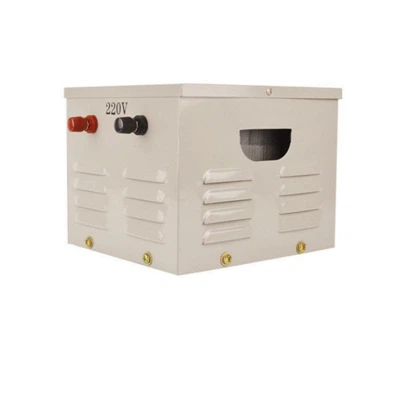
At the end of the day, selecting a low voltage transformer isn’t rocket science, but it’s not just grabbing the first one that looks right. It’s matching your load, voltage, environment, and the type of devices you’re powering. Skip the shortcuts, add that 10-20% buffer, and don’t cut corners on environment or quality. If you’re still not sure, or you’ve got a project that doesn’t fit the common examples, hit us up to chat through it — we’re here to make sure you get the right unit the first time, so you don’t have to re-do the job a few months later.
Low Voltage Switchgear References
- National Electrical Manufacturers Association (NEMA). Standard for Low-Voltage Transformers, 2021.
- Underwriters Laboratories (UL). Safety Standard for Low-Voltage Transformers, UL 1585, 2020.
- International Electrotechnical Commission (IEC). Low-Voltage Transformer Performance and Safety Requirements, IEC 61558, 2019.
- U.S. Department of Energy. Energy Efficiency Guide for Low-Voltage Transformers, 2022.
- Electrical Construction Maintenance (EC&M). “Selecting Low-Voltage Transformers for Commercial and Industrial Applications,” 2023.
Huachi Electric Co., Ltd.
We’re well-known as one of the leading low voltage transformer manufacturers in China, featured by quality products and good service. Please rest assured to buy customized low voltage transformer made in China here from our factory. Contact us for more details.
Address: Plastic Park, Tongyu Street, Luqiao District, Taizhou City, Zhejiang Province
E-mail: HCDQ2026@163.com
WebSite: https://www.huachi-electric.com/
