A few months back, I got a frantic call from a long-time client—they had a batch of custom thermocouple cables for their industrial furnace line that failed mid-production, costing them $120,000 in shutdown fees and a reputation hit with their biggest automotive parts customer. When our on-site service tech arrived to diagnose the issue, we found the cables had been stored in a damp corner of their warehouse, exposed to constant temperature swings and stacked haphazardly on rough concrete. The insulation had cracked, the conductors had corroded, and the shield that was supposed to block electrical interference had been completely compromised by dust and moisture. That’s when I realized: most of the problems we see with specialty cables aren’t from faulty manufacturing—they’re from bad maintenance. Specialty Cables
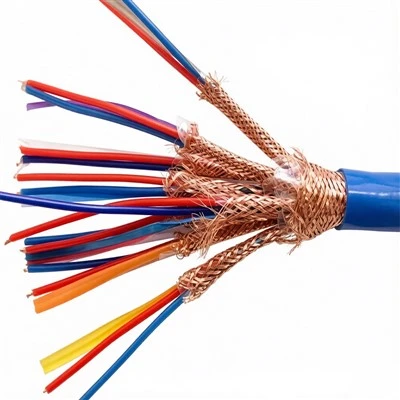
As someone who’s spent 18 years in the specialty cables supply business, working directly with everyone from aerospace engineers to food processing plant managers, I’ve seen every mistake in the book. Specialty cables aren’t your standard Ethernet or power cords you pick up at a home improvement store. They’re custom-built for specific, often harsh environments: subsea power cables that have to withstand thousands of feet of water pressure, high-temperature thermocouple cables for furnaces that run at 1,800°F, medical device cables that go inside MRI machines, or even mining cables that sit in dust and mud day in and day out. One-size-fits-all maintenance doesn’t work here. But with the right, environment-specific routine, you can extend the life of these cables by 30-50%—saving you the cost of premature replacements, unplanned downtime, and those ugly repair bills.
Let’s break this down by the most common specialty cable types, because maintenance changes drastically depending on what your cable is built for. No two specialty cables are the same, so don’t treat them like they are.
First, high-temperature specialty cables. These are the ones used in steel mills, aerospace test cells, and commercial kitchen ovens. I’ve worked with a supplier that made cables for a rocket engine test facility—those cables are rated for 2,200°F, but we still see failures when they’re not maintained right. The biggest mistake here is ignoring thermal cycling. Every time a furnace cycles on and off, the cable’s insulation and conductors expand and contract. Over time, that causes micro-cracks in the insulation, even if the material is rated for extreme heat. If you seal those cables too tight at the gland, there’s no room for that movement, and the insulation pulls away from the conductors. Another issue with high temp cables is contamination—oil, grease, or even food residue (yes, even commercial kitchens) can break down the high-temp insulation over time. We had a pizza chain client a few years back that failed half their oven cables because they used harsh degreasers that ate through the PTFE insulation. For these cables, the maintenance routine is straightforward: monthly visual inspections, testing for continuity and insulation resistance quarterly, and replacing any cable that shows even minor cracking or discoloration at the ends (that’s where most failures start, at the connections, not the main length).
Next up, subsea and marine specialty cables. These are the ones used for offshore wind farms, underwater pipelines, and research ROVs. The environment here is brutal: saltwater corrosion, constant pressure, UV exposure when parts of the cable are above water during installation or maintenance. I remember a client that had a subsea communication cable for a wind farm off the coast of Louisiana that failed after just two years, when it was supposed to last 15. When we pulled it up, the outer jacket was pitted from saltwater, and the copper conductors were covered in a green patina that’s not just oxidation—it’s galvanic corrosion from the different metals in the cable and the ocean. The biggest maintenance mistake here is skipping routine mid-water testing. Most operators only check these cables when there’s a failure, but if you use an ROV to do a visual inspection of the cable route twice a year, you can spot small abrasions from ship anchors or fishing nets before they turn into full breaks. Also, never use standard marine-grade cable for subsea applications—specialty subsea cables have a heavy cross-linked polyethylene jacket and a steel armor layer that needs to be cleaned and inspected for rust every time the cable is brought up for servicing. And don’t store subsea cables on dry land for long periods without wrapping them in UV-resistant sheeting—salt residue on the jacket, even when dry, can attract moisture and cause corrosion over time.
Then there are medical specialty cables, used in MRI machines, surgical robots, and patient monitoring devices. These cables are built to be biocompatible, flexible, and resistant to frequent sterilization—usually with autoclaving, chemical disinfectants, or wipes. The problem here is that most hospital facilities use generic disinfectants that aren’t formulated for medical cables. I’ve seen surgical robot cables that failed because staff used harsh bleach-based wipes, which broke down the flexible polymer jacket. The biggest issue with medical cable maintenance is cleaning and storage. Always use disinfectants approved by your cable’s manufacturer—we supply our medical cables with a guide that lists compatible cleaners, and I can’t tell you how many clients skip that step because it’s easier to use what’s on hand. Also, don’t kink or bend medical cables beyond their minimum bend radius—those tight bends, especially near the connectors, can crack the inner insulation and lead to electrical interference, which is a huge risk in MRI suites where even minor signal loss can throw off a scan. For these cables, do a visual check before every use, test electrical continuity annually, and replace any cable that has frayed ends or has been dropped or stretched—those are small signs that will lead to big failures during a surgery or scan.
Mining and industrial specialty cables round out the most common category. These cables are used in coal mines, construction sites, and manufacturing plants where they’re exposed to dust, mud, heavy machinery, and impact. I once worked with a mining client that stacked their power cables on the floor of their mine, right next to heavy conveyor belts. The outer jacket was cut by the belts, and sediment got into the connectors, causing short circuits. The maintenance here is all about handling and storage. Never drag these cables across rough surfaces—use cable reels or tracks to keep them off the ground. If they do get covered in mud or dust, clean them with a low-pressure air hose after use, because pressure washing can force water into the connectors. Inspect for cuts or abrasions on the outer jacket every week, especially near the ends where the cable connects to equipment, and replace any cable that has a cut longer than half an inch—even a small cut can let in water or debris that causes a failure.
Now, no matter what type of specialty cable you’re working with, there are some universal maintenance rules I’ve picked up over the years that apply to every single one. The first is storing cables correctly. I can’t stress this enough. I’ve seen clients store subsea cables in a hot, dry warehouse that’s exposed to sunlight, medical cables in a closet with cleaning chemicals, and high-temp cables in a damp corner of a factory. The rule is: store cables at a temperature between -40°F and 140°F, never stack anything heavy on top of them, and keep them away from chemicals, moisture, and direct sunlight. If a cable is on a reel, keep it on the reel during storage—don’t unspool it and leave it lying around, because that causes kinks and twists that damage the internal structure.
The second universal rule is testing regularly, not just when something goes wrong. For specialty cables, visual inspections alone aren’t enough. You need to test for insulation resistance, continuity, and electrical interference. For example, high-temp cables in furnaces should have their insulation resistance tested quarterly—if it drops below the manufacturer’s specified threshold, that means moisture or contamination has gotten into the insulation, and you need to replace the cable. For subsea cables, use time-domain reflectometry (TDR) testing every six months—this tool sends a signal through the cable and tells you exactly where any damage or break is, even if it’s hundreds of feet under water. For medical cables, do a signal integrity test before every use to make sure there’s no interference that could affect patient care.
The third rule is handling cables properly during installation and maintenance. This sounds simple, but so many people ignore it. Never bend a specialty cable beyond its minimum bend radius—this is a number every manufacturer provides, usually 10x the cable’s diameter for flexible cables, and 5x for rigid ones. Bending too tight cracks the inner conductors and insulation. Also, always use the correct connectors and glands for your cable—if you use a generic gland for a custom subsea cable, it won’t create a watertight seal, and you’ll get leaks that corrode the cable.
And here’s a key point I always emphasize to clients: follow the manufacturer’s guidelines, not a generic maintenance manual. Every specialty cable we supply comes with a specific maintenance guide tailored to its design. A thermocouple cable for a furnace has completely different needs than a medical MRI cable, so don’t use the same routine for both. If you lose the guide, or have questions about what maintenance is right for your specific cable, reach out to us—we’re not just a supplier, we’re here to help you keep your equipment running.
Let me tell you one more story to drive this home. A year ago, we had a new client in the food processing industry that had a line of specialty cables for their pasteurization machines, designed to handle high temperatures and frequent cleaning. They were using a general maintenance routine they found online, which included power washing the cables with hot water every day. After six months, half the cables had failed, and they were blaming our manufacturing. When our tech went out, we realized the power washing was forcing hot water into the cable connectors, which were not sealed for high-pressure cleaning. We adjusted their maintenance routine—switched to low-pressure wiping, added sealed connectors, and scheduled monthly insulation tests. Since then, their cable failures have dropped to zero. That’s the kind of result good maintenance can get you.
At the end of the day, specialty cables are a big investment. They cost more than standard cables, but they’re built to handle unique challenges. The last thing you want is for a preventable failure to shut down your operations, cost you money, or put people at risk. The good news is that maintaining specialty cables isn’t complicated—it just takes consistency and following the right steps for your cable type.
If you’re dealing with failing specialty cables, or want to put a proactive maintenance plan in place for your current stock, don’t hesitate to reach out. We work with businesses across every industry, from aerospace to food processing, and we’ll help you figure out exactly what your cables need to last as long as they’re designed to.
Compensating Cables References
- Specialty Cable Maintenance Guidelines. InterNational Electrical Testing Association (NETA), 2022.
- Submarine Power Cable Installation and Maintenance Best Practices. International Council on Large Electric Systems (CIGRÉ), 2021.
- Medical Device Cable Care and Sterilization Protocols. Association for the Advancement of Medical Instrumentation (AAMI), 2023.
- High-Temperature Cable Performance and Aging. IEEE Transactions on Dielectrics and Electrical Insulation, Vol. 28, No. 3, 2021.
- Mining Cable Environmental Resilience and Maintenance. Society for Mining, Metallurgy & Exploration (SME), 2020.
Anhui Yuantong Cable Co., Ltd.
As one of the most professional specialty cables manufacturers and suppliers in China, we offer a wide range of cables with superior quality. Please feel free to wholesale bulk customized specialty cables from our factory. Also, pricelist is available.
Address: Yongfeng Industrial Park, Tianchang City, Anhui Province
E-mail: ahytcable@126.com
WebSite: https://www.yuantongcable.net/
