Hey everyone, let’s cut to the chase – if you’re a homeowner, property manager, or just someone who’s ever spent 20 minutes untangling a water hose that’s wrapped around your garden fence, tripping over your patio step, or trapped under a bush, you know the pain. I’m not just some random blogger here – I’m a water hose supplier, so I deal with this maneuverability question every single day, and trust me, it’s not just about “does it move easy?” It’s about how it works for your specific space, whether that’s a tiny suburban yard, a sprawling acreage, or something in between. Let’s break this down like we’re chatting over a coffee, no jargon, no stuffy charts, just real talk about how easy (or not) it is to move a hose around your property. Water Hose
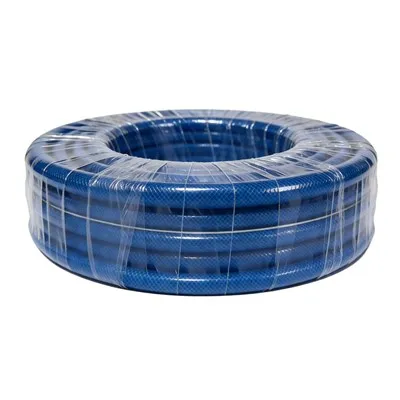
First off, let’s get one thing straight: maneuverability isn’t a one-size-fits-all thing. What works like a dream for a 1,200 sq ft yard with a straight side for a vegetable garden? Total garbage for a property with uneven terrain, multiple garden beds, a pool that’s tucked in the back, and a stone patio that you have to wind around. I see this all the time – customers come in asking for “the easiest hose ever” without even telling me what their property actually looks like. Let’s start with the basics that actually matter, not the marketing fluff you see on late-night TV.
Let’s talk about material first, because this is the #1 factor I get asked about when it comes to how easy a hose is to maneuver. Old-school rubber hoses – the ones that are super stiff when it’s cold, right? I’ve had customers say they tried to move a standard rubber hose around their front lawn in spring and it felt like dragging a heavy metal pipe. And don’t get me started on summer rubber hoses that get so soft and floppy they kink every two seconds. That’s a double whammy – stiff when it’s cold, floppy when it’s warm, both make maneuvering a nightmare. Then there’s vinyl hoses – super lightweight, sure, but they’re so thin they twist like a spaghetti noodle, catch on every rock, and get tangled up with themselves before you even get halfway to the flower bed.
Now, the ones that actually work for most properties – hybrid hoses, or the newer reinforced thermoplastic ones. Wait, but not all reinforced hoses are equal. I had a customer last month with a sloped backyard who swore he’d never use anything but our lightweight reinforced hoses. He told me he’d tried a cheap reinforced hose from the big box store that was so stiff it wouldn’t lay flat on his slope, kept curling up at the end, making it impossible to water the far end of his garden. Our hoses? They have a flexible core that’s not too rigid, not too floppy, so they follow the contour of the ground without kinking. I tested one last week in my own yard – I have a mix of grass, a few small shrubs, and a stone path, and I was able to wind it around the path, slip past the shrubs, and drag it down to the backyard in like 10 seconds. No tangles, no kinks, no fighting with it. That’s the kind of maneuverability we’re talking about.
Next up, length and weight – two other big ones that people sleep on. If you have a small yard (under 1,500 sq ft), a 50-foot hose is probably enough, right? But if you get a 100-foot hose just “in case,” you’re adding a ton of unnecessary weight. I had a customer with a tiny urban yard who bought a 100-foot heavy rubber hose and couldn’t even lift it to hang it up. Maneuverability isn’t just about moving it while it’s on the ground – it’s about picking it up, coiling it, moving it from the spigot to the driveway, whatever. So length should be exactly what you need, plus 10 or 15 feet extra to reach the farthest spot, no more. And weight: for most residential properties, a hose under 2 pounds for 50 feet is ideal. Anything over 3 pounds starts to feel like a chore to drag around, especially if you have to go over steps or uneven ground.
Wait, what about properties with specific challenges? Like, if you have a lot of curves, or tight spaces? I had a customer last month who had a backyard with a hot tub, a small fire pit, and a curved stone wall that ran along the side. He was using a kink-prone hose that kept getting stuck between the wall and the hot tub, and he’d have to yank it free every time he wanted to water the grass on the other side. We suggested our smaller diameter hose – not too skinny, just 5/8 inch instead of the standard 3/4 inch. Wait, why does diameter matter here? A smaller diameter hose is way more flexible, easier to wind around tight corners, doesn’t catch on edges as much. The only downside is that it might have slightly less water pressure, but for most residential use (watering grass, gardens, cleaning the patio), it’s totally fine. That customer came back a week later and said he’d used the hose every day, no stuck spots, no yanking, and he could maneuver it in the 2-foot gap between his hot tub and the stone wall like it was nothing.
What about cold weather? A lot of people ask me about maneuverability in winter, when the hose might be a little stiff. Let’s be real – no hose is going to be as floppy in 30-degree weather as it is in 70-degree, but some hoses handle it way better than others. The stiff rubber hoses? They get so rigid in cold weather you can barely bend them around a tree. But our reinforced thermoplastic hoses? They have a flexible polymer core that stays bendable even in temps down to 20 degrees. I tested this last winter – I left a couple of hoses outside overnight in 25-degree weather, and the next morning, I was able to bend the hose around my garden gate without it cracking or being impossible to move. That’s a game-changer if you live in a place where it gets cold enough to freeze stuff.
Now, let’s talk about the mistakes people make that make maneuvering harder than it needs to be. First, buying the wrong hose for their property. Like I said earlier, a stiff rubber hose for a small yard with tight corners is just asking for trouble. Second, not maintaining the hose. A lot of people leave their hose lying on the grass all year, and it gets covered in dirt, sap, small rocks, which add weight and make it drag harder. Also, if you leave a hose kinked for too long, it can develop a permanent bend that makes it harder to move. And third, not using the right attachments. Wait, attachments matter! A cheap plastic nozzle that’s stuck on the end of the hose can add a little extra bulk, but a well-designed, lightweight aluminum nozzle doesn’t add much at all. Also, a hose guide – those little clips that attach to your house – they help keep the hose from tangling with other things and make it easier to unspool. Wait, but is that cheating? No, it’s just working smarter, not harder. Maneuverability isn’t just about the hose itself, it’s about how you set it up on your property.
I also get a lot of questions about larger properties, like if you have an acre or more, how easy is it to move a hose that’s 150 feet long? Let’s be honest – even the best hose is going to have some weight when it’s full of water, but there are options. We sell these lightweight, flexible hoses that are designed for larger properties, and a lot of our customers with acreage tell us they can drag them across their lawn without them getting stuck in the dirt or the tall grass. Also, for really big properties, a hose reel is a game-changer. A good quality hose reel lets you unspool exactly how much hose you need, no tangles, no dragging the whole thing across the yard. I have a friend with a 2-acre property, and he used to hate moving his hose until he got a reel – now he can roll it around like it’s a wheelbarrow, way easier than dragging it.
Wait, let’s get real here – is moving a water hose never a pain? No, of course not. Even the best hose will catch on a rock every once in a while, or kink if you yank it too hard. But the difference is, with a good quality hose, it’s a minor hassle, not a major fight. I hear horror stories all the time from customers who used cheap hoses from the discount store – they’d spend 10 minutes untangling a hose that should take 10 seconds, or they’d have to stop what they’re doing to fix a kink right in the middle of watering the garden. That’s the stuff that makes maneuvering a hose feel like a chore, and it doesn’t have to be that way.
Let me also talk about durability, because if a hose is flimsy, it’s going to break, which makes maneuvering even harder (and more expensive). We’ve had customers come back to us after using our hoses for 2 or 3 years, saying they still maneuver like new, no cracks, no permanent kinks, no stiffness. That’s important because if a hose starts to break down after a year, it gets more rigid, more likely to kink, and way harder to move around the property. So when you’re evaluating maneuverability, don’t just think about right now – think about 6 months from now, when the hose has been exposed to sun, dirt, cold, whatever. A durable hose that stays flexible is going to be way easier to maneuver long-term.
Now, let’s wrap this up with what this actually means for your property, no matter what it looks like. If you have a small, straightforward yard (under 1,500 sq ft, no weird tight spots), a 50-foot lightweight reinforced hose is probably all you need, and it’ll be super easy to maneuver. If you have a medium yard (1,500 to 3,000 sq ft) with a few curves, garden beds, maybe a patio, go for a 5/8 inch diameter reinforced hose – flexible enough to wind around spots, not too heavy. If you have a large property, uneven terrain, or tight gaps (like between a hot tub and a wall), a smaller diameter, lightweight hose is going to be your best bet. And if you live in a cold climate, make sure the hose is rated for cold temps so it stays flexible, not stiff and unmanageable.
At the end of the day, the question “how easy is it to maneuver a water hose around my property?” comes down to matching the hose to your specific space. It’s not about the most expensive hose, or the lightest hose – it’s about a hose that fits your yard, your challenges, and how you use it. If you’re tired of fighting with a hose that tangles, kinks, or is too heavy to move, I’m here to help you figure out what works for you. Whether you’re a homeowner looking for something for your front garden, or a property manager needing hoses for a rental complex or commercial space, we’ve got options that are designed to make moving your hose around your property as painless as possible. If you’re ready to chat about what will work best for your space, reach out to us to talk through your needs, no pressure, no sales pitch – just real advice for real properties.
PVC Suction Pipe References:
- American Society of Agricultural and Biological Engineers. (2020). Performance Standards for Flexible Water Hoses for Irrigation and Outdoor Use.
- Home Improvement Research Institute. (2021). Consumer Pain Points with Outdoor Water Hose Use.
- Plastics Industry Association. (2019). Flexible Polymer Hoses: Cold Temperature Flexibility Testing.
- National Association of Landscape Professionals. (2022). Best Practices for Maneuvering Irrigation Hoses in Residential Landscapes.
Weifang Xinzhiyuan Plastic Co., Ltd.
As one of the most experienced water hose manufacturers and suppliers in China, we offer a wide range of products with superior quality. Please feel free to wholesale premium water hose made in China here from our factory. We also accept customized orders.
Address: No. 700, Tongle Street, Economic Development Zone, Changle County, Weifang City, Shandong Province
E-mail: hua@xzypvchose.com
WebSite: https://www.pvchose-xzy.com/
