As a supplier of deep drawn parts, I’ve been involved in this industry for quite some time, witnessing the evolution and innovation in the design and production of these components. Deep drawn parts play a crucial role in various industries, from automotive to electronics, and the design process is a blend of art and science. In this blog, I’ll share some insights on how to design deep drawn parts effectively. Deep Drawn Parts

Understanding Deep Drawing
Before delving into the design process, it’s essential to understand what deep drawing is. Deep drawing is a metal forming process in which a flat sheet metal blank is transformed into a three – dimensional part by using a punch and die set. The punch presses the sheet metal into the die cavity, causing the metal to flow and stretch. The ratio of the depth of the drawn part to its diameter is a key factor; typically, a part is considered "deep drawn" when this ratio is greater than 1.
Material Selection
The first step in designing deep drawn parts is choosing the right material. The material selection depends on several factors, such as the part’s intended use, mechanical properties required, corrosion resistance, and cost. Commonly used materials for deep drawing include steel, aluminum, copper, and brass.
Steel is a popular choice due to its high strength and good formability. Different grades of steel can be selected based on the specific requirements of the application. For example, low – carbon steel is often used for its excellent deep drawability, while high – strength steel may be used when the part needs to withstand heavy loads.
Aluminum is lightweight, has good corrosion resistance, and is easily formable. It is widely used in the automotive and aerospace industries where weight reduction is a priority.
Copper and brass are known for their electrical conductivity and corrosion resistance. They are often used in electrical and plumbing applications.
When selecting a material, it’s also important to consider its thickness. The thickness affects the drawability of the material, as well as the strength and weight of the final part. Thicker materials may require more force during the deep drawing process, which can increase the risk of cracking or tearing.
Design Considerations
Wall Thickness
Maintaining a uniform wall thickness is crucial in deep drawn parts. Varying wall thickness can lead to stress concentrations, which can cause cracking during the drawing process or in the final application. Designers should aim for a consistent wall thickness throughout the part, with a tolerance of no more than a few percent.
Radius and Fillets
Sharp corners and edges are to be avoided in deep drawn part design. They act as stress concentrators, increasing the likelihood of cracking during the drawing process. Instead, use generous radii and fillets at all corners and transitions. A general rule of thumb is to use a minimum radius of at least one times the material thickness.
Draft Angles
Draft angles are essential for easy ejection of the part from the die after the drawing process. A draft angle of 1 – 3 degrees is typically recommended, depending on the depth and complexity of the part. Without proper draft angles, the part may get stuck in the die, leading to damage or deformation.
Part Geometry
The overall geometry of the part also affects its deep drawability. Simple, symmetrical shapes are generally easier to draw than complex or irregular ones. Complex geometries may require multiple drawing operations or the use of special tools. When designing parts with multiple features, it’s important to consider how these features will interact during the drawing process. For example, protrusions or recesses close to each other can cause local stress concentrations, which need to be addressed.
Feasibility Analysis
Once the initial design is complete, a feasibility analysis should be conducted. This involves using computer – aided engineering (CAE) software to simulate the deep drawing process. CAE simulation can predict potential problems such as wrinkling, cracking, and springback.
Wrinkling occurs when the material buckles under compressive stresses during the drawing process. Cracking can happen due to excessive tensile stresses. Springback is the tendency of the material to return to its original shape after the forming process is complete. By analyzing these potential issues through simulation, designers can make necessary adjustments to the design before starting the production process.
Tooling Design
The design of the punch and die set is also a critical part of the overall process. The punch and die must be designed to match the desired shape and dimensions of the deep drawn part. The surface finish of the tooling is important, as a smooth surface can reduce friction between the material and the tool, improving the quality of the drawn part.
The tooling should also be designed for easy maintenance and replacement of worn parts. In addition, the tooling must be able to withstand the high forces involved in the deep drawing process. Heat treatment and proper material selection for the tooling are essential to ensure its durability.
Prototyping and Testing
After the design and tooling are finalized, it’s time to create a prototype. Prototyping allows designers to test the actual part and verify its functionality. During the prototyping phase, any issues with the design or the manufacturing process can be identified and corrected.
Testing the prototype may involve various methods, such as dimensional inspection, mechanical testing, and performance testing. Dimensional inspection ensures that the part meets the specified tolerances. Mechanical testing, such as tensile testing and hardness testing, can verify the mechanical properties of the part. Performance testing assesses how the part behaves in its intended application.
Quality Control
Quality control is an ongoing process throughout the production of deep drawn parts. In – process inspections should be carried out at regular intervals to detect any defects early. This includes visual inspections, dimensional measurements, and non – destructive testing methods such as ultrasonic testing or magnetic particle testing.
Final inspections are also crucial to ensure that the finished parts meet all the required specifications. The parts should be thoroughly inspected before being shipped to the customer.
Conclusion
Designing deep drawn parts is a complex process that requires careful consideration of multiple factors, from material selection to quality control. By following the principles outlined in this blog, designers can create high – quality deep drawn parts that meet the needs of various industries.
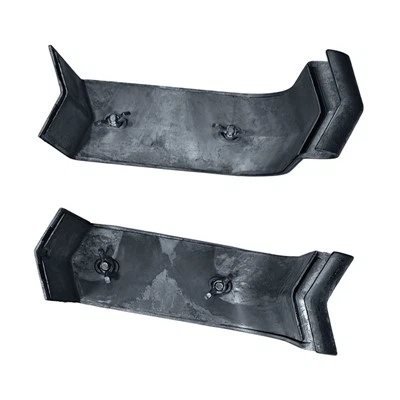
If you are in need of deep drawn parts for your project, I invite you to reach out to discuss your specific requirements. Our team of experts is ready to work with you to design and produce the perfect parts for your application. We have the experience and expertise to ensure that your project is a success. Feel free to get in touch with us to start the procurement process and explore the possibilities of our deep drawn parts.
Stamped Parts References
- Dieter, G. E. (1988). Mechanical Metallurgy. McGraw – Hill.
- Kalpakjian, S., & Schmid, S. R. (2008). Manufacturing Engineering and Technology. Prentice Hall.
- Sachs, G. (1940). Metal Forming: Mechanics and Metallurgy. American Society for Metals.
Yuyao Aozhou Metal Products Co., Ltd.
We are one of the most experienced deep drawn parts manufacturers and suppliers in China. With a professional production team, we are able to meet the needs of the majority of our customers. Please rest assured to buy customized deep drawn parts made in China here from our factory.
Address: No.6, Nanbailonggang, Wuma Industrial Zone, Lubu Town, Yuyao City
E-mail: xqr-2316@163.com
WebSite: https://www.cnaozhou.com/
